Science is “built on the shoulder of giants” (but can be done by anyone, as long as “first principles” are adhered to)
In these interesting times of politicization of science, we’ve decided we can’t sit idly by, taking ...

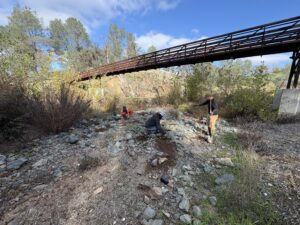
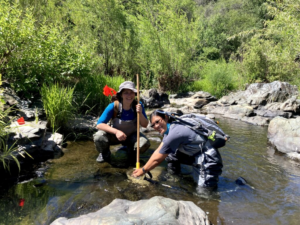
It’s midwinter and the sun hangs low in a clear sky over Dry Creek as Alex, Sierra Streams’ lead restoration technician, guides the two of us along a narrow trail. We wind and weave through willow thickets and past tangled blackberry bramble, stepping over puddles and backwater pools as we pick our way down towards the water’s edge. As we approach Alex points out the jagged stumps of shrubs and small cottonwoods that line the creek channel, shorn from their bases a foot above the ground. Ahead of us lies further evidence- a small but sturdy dam, thatched with brush and branches, that transects the creek.
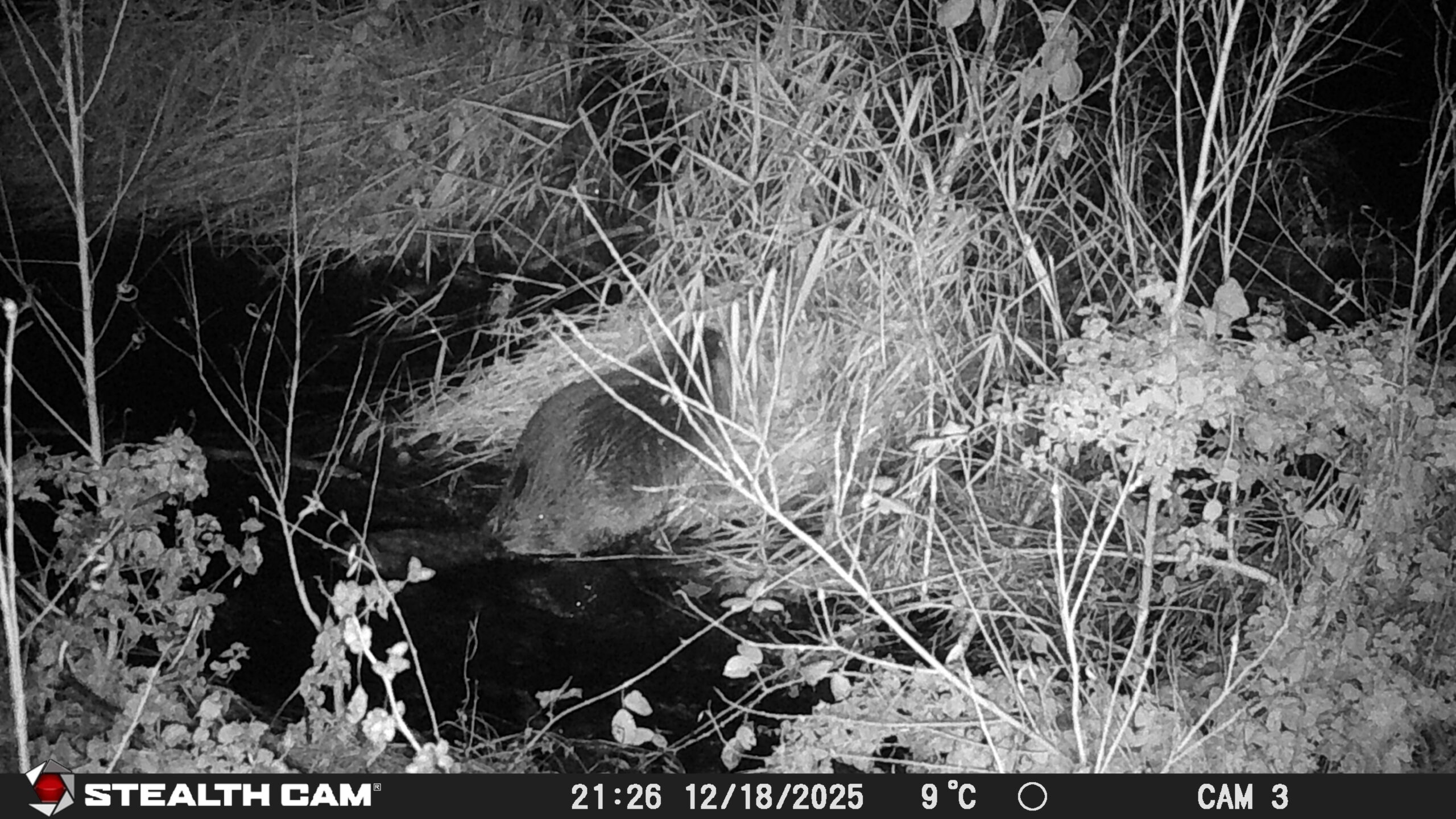
The creature responsible for these efforts is none other than Castor canadensis, the North American Beaver. This is a known site for beaver activity on Dry Creek, and we are here to retrieve wildlife camera footage. Since beavers are crepuscular (most active from dusk until dawn) their schedules are very different from ours. We rely on wildlife cameras to give us a better idea of what they’ve been up to. We have several active restoration sites along Dry Creek, and keeping track of local wildlife is just one of the myriad tasks involved in our monitoring work.

In more recent decades, Beavers have become relatively common in a number of our local watersheds (including Dry Creek and the Bear River), but for a long time that wasn’t exactly the case. At a certain point, somebody decided that a beaver might make a nice hat and the rest was history. The early fur trade in California- which predates the gold rush by 64 years – brought beaver populations in this state to the brink of extinction in little more than a century. Their presence in this region has been nearly invisible for so long that it’s become a common misconception that beavers are not native to the Sierra foothills in the first place. However, a recent research has unearthed strong evidence suggesting that beavers have, in fact, been here all along. (Lanman et. al) And today, with a population that continues to grow– after efforts to reintroduce them starting in the 1950’s–I’m happy to report that the North American Beaver has been making a comeback.
At Sierra Streams, we love beavers. Not just for their looks (brown, furry, cute), but because they act as an important keystone species. Their tenacious approach to engineering can add incredible complexity to rivers and streams, creating diverse habitat for a number of other species. The dams they work so tirelessly to build slow down the flow of water and send it in all sorts of directions across the floodplain, improving fire resilience, decreasing erosion, and ultimately keeping moisture higher up in the watershed for longer. (Moravek et. al)

Back at the office after our foray into the field, I was excited to catch a glimpse of these builders in action, but much to my dismay, not a single beaver photo materialized. Another month later, and still, nothing. But in February, with great excitement, I finally came across the series of photos I’d been waiting for. The footage showed one very determined beaver who’d been busy burning the midnight oil for the better part of a week, improving their dam on Dry Creek one precious stick at a time. This is one of the most rewarding parts of this job and of what we do here at Sierra Streams – the opportunity to observe creatures living their lives and going about their business in the landscapes and waterways we work so hard to protect.
———————————–
Sources
Lanman et al. 2012 “The Historical Range of Beaver in the Sierra Nevada: a review of the evidence”, California Department of Fish and Wildlife
“Beaver.” State of California, Department of Fish and Wildlife, https://wildlife.ca.gov/Conservation/Mammals/Beaver.
Moravek et. al. 2025 “Maximizing the Potential Benefits of Beaver Restoration for Fire Resilience and Water Storage.” Ecological Applications.
Hawkes, Alison. “Beavers Used to Be Almost Everywhere in California.” Bay Nature, 19 June 2014, https://baynature.org/magazine/archive/beavers-used-to-be-almost-everywhere-in-california/.