SIERRA STREAMS
Watershed Monitoring, Research, and Restoration
Techniques for responsible land management in the Northern Sierra Foothills. There is not a cookie cutter way to steward our land. Each backyard is different and so your techniques for managing your land should be based on your own knowledge and experience of your environment. We offer some guidelines below as a place to get started, but we encourage you to try new things and find what works best for you.
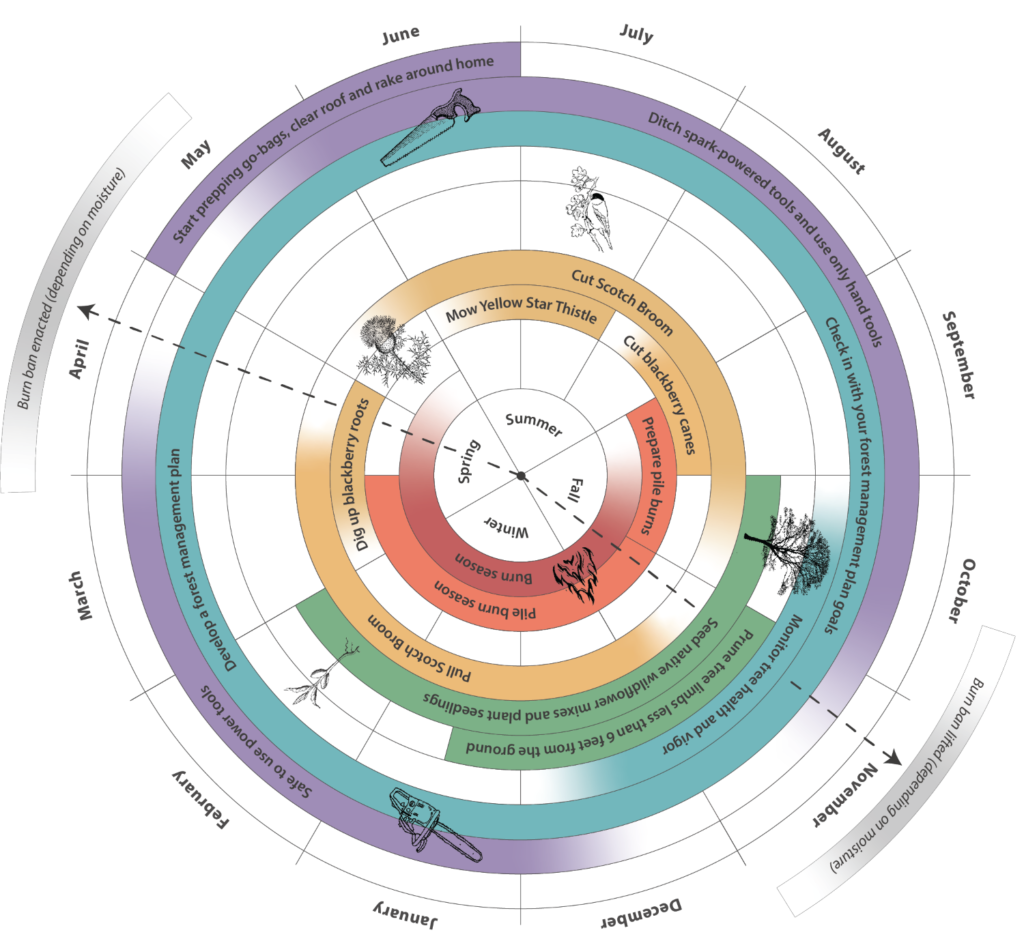
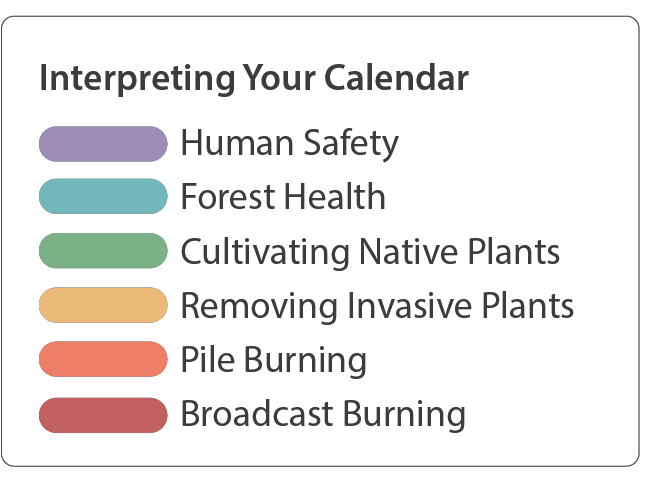
As residents of the wildland-urban interface (WUI), we have a responsibility to steward our lands to make them more resilient. This calendar was developed to inspire and remind residents of the ongoing stewardship actions that we can take. While the timelines illustrated here may seem defined, the exact timing of each management activity is a suggested guideline and subject to change based on the present conditions. This is not a comprehensive list of all you can do to manage your lands; instead, it is a starting point to help cultivate a healthy, resilient ecosystem and be prepared for the eventuality of wildfire.
Forests and fire ignore property boundaries, and our approach to managing forest fuels should too.
“Resilience” is a term thrown around often in the world of environmental management. So what is resilience? Resilience is actually a measurable property of an organism or system, and is essentially “the inverse of resistance” divided by “recovery”. Resistance is an organism’s ability to withstand a stress, while recovery is its ability to return to pre-stress function.
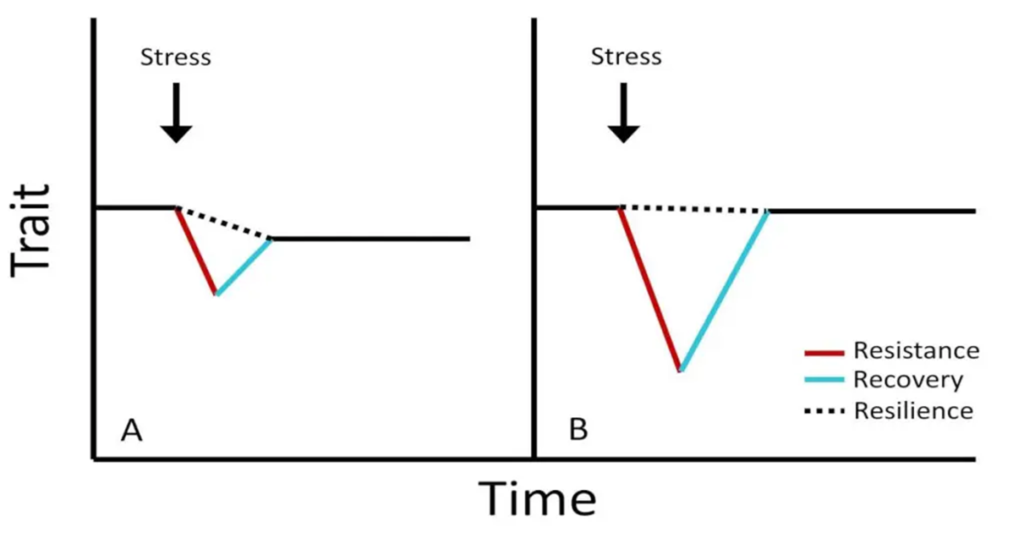
Forest resilience is the ability of a forest stand or forested landscape to withstand stressors such as drought or fire and “recover”, with recovery being a function of everything from tree growth and health to overall forest ecosystem health such as diversity or wildlife habitat.
When it comes to wildfire, study after study continues to show that the most resilient forests are those with a high degree of “heterogeneity”—essentially “clumpiness”, or how variable a forest is in terms of its distribution of clumps and gaps. Forests with high levels of clumpiness mimic those that fires historically created, and that are fire-adapted. Fire can still burn hot in clumps of dense vegetation, but natural gaps where prior fires cleared vegetation act as breaks, slowing down fire spread and reducing overall landscape-scale fire severity.
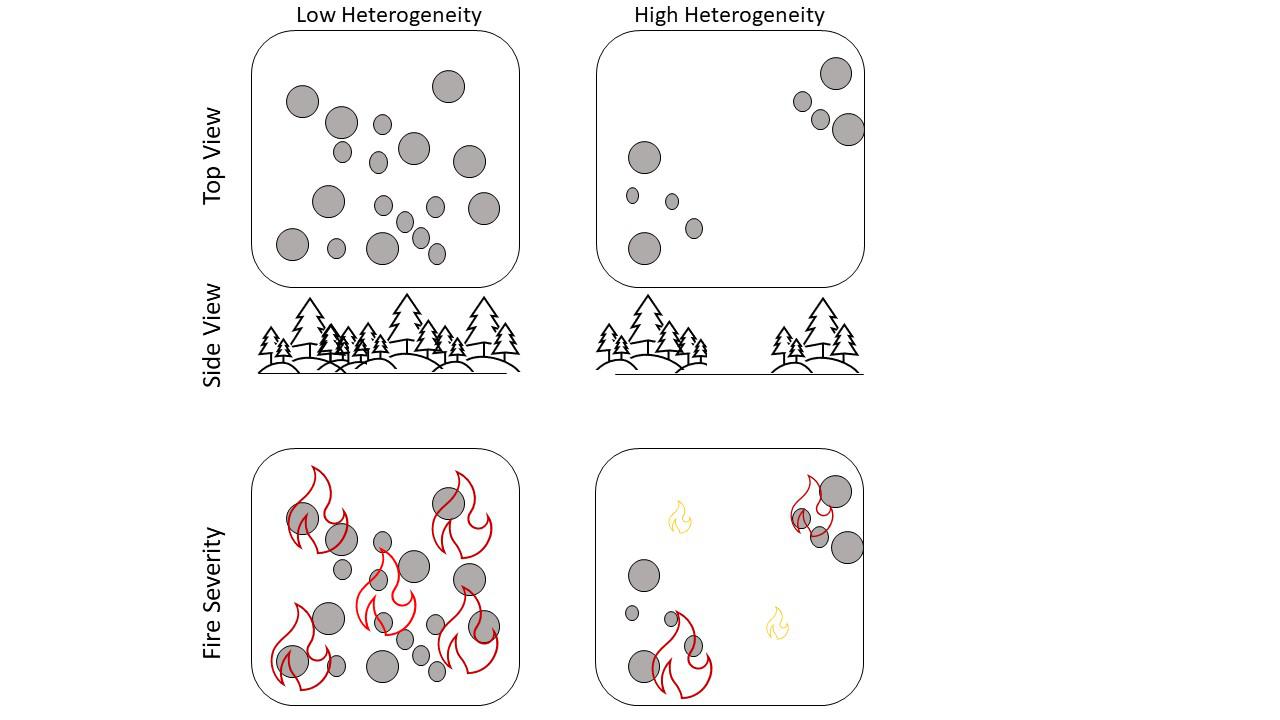
Note that heterogeneity also does not just mean a lack of vegetation; remember that a forest without vegetation is no forest at all! Further, blanket treatments in which we only reduce shrubs or ladder fuels can reduce fire likelihood, but have some negative impacts we will discuss later in this document. Instead, creating gaps and leaving clumps mimics what forests that historically burned at low severity looked like, and these forests were (and can be) resilient.
Your home in the WUI isn’t an island—it is a part of a connected forest landscape, and we should steward our properties with this in mind. This also means that in some cases, the best solution may be no work at all, as long as the forest is healthy in adjacent areas. Let’s consider your property and its place in the landscape as an extension of the defensible space model.
Find everything you need to know about defensible space on this website:
Defensible Space – Ready for Wildfire.
Planning at this scale isn’t always feasible or easy from our on-the-ground perspective within our own properties, but there are options for assistance.
FireWise Communities.
FireWise communities are groups of landowners that come together to get certified as a FireWise community. Certification requires management plans across the whole community, including work plans for fuel clearance, defensible space, and evacuation routes. Further, joining a FireWise community may help you reduce insurance costs!
For more information, and to identify a FireWise community near you, visit Firewise Communities – Ready for Wildfire.
Mapping options to view your landscape.
Using simple online tools can allow you to view your property at the landscape scale. Further, numerous tools exist for viewing your property in the context of landscape-scale fire.
Thinning ladder fuels and reducing overall forest density while considering heterogeneity will not only improve forest health and resilience to stressors, but develop habitat for wildlife. Forests of the Jones Bar area are overstocked with small-diameter biomass; with maintenance, this ensures protection of the forest component, and therefore, habitat and biodiversity protection.
Brush piles offer perches for birds and cover for small animals. Brush piles should have the largest materials at the bottom, with the smallest-diameter brush at the top. Piles that are close to water are appealing to wildlife, and in openings where there is otherwise not much forest cover.
“Snags” are trees that are dead or dying. Snags are excellent for wildlife, as they offer cavities for nesting, limbs for perching, and numerous insects. “Choice” snags are trees that have cavities, loose bark, limbs, and signs of insect presence (holes, sawdust-like frass, galleries under bark). Different sizes and types of snags are encouraged.
Nest boxes encourage nest sites for wildlife where they may otherwise not be present.
Using fencing to prevent browsing and trampling of soils and streams can restore vegetation, which provides cover and food for wildlife. Streams with shaded water are cooler and reduce evaporation which benefits aquatic species.
Habitat connectivity refers to two or more areas of undeveloped habitat that are connected to each other in an otherwise isolated area. These areas are also referred to as “wildlife corridors”. These strips or patches of connectivity can attract wildlife and enable them to travel or dwell with a sense of safety.
Incorporating bird baths or above/in-ground holding ponds are activities that support wildlife needs. Allow water to naturally pool and protect those pools from vehicles and heavy recreational use to limit erosion, maintain the water quality, and be a great source for drinking, resting or breeding—even if they are temporary.
Herbaceous cover benefits many animals, including when the cover is in forest openings. Snakes, raptors, turkey, sparrows and foxes are some of the many animals that use these openings for hunting, feeding, and cover (Brittingham, 2016). Planting native bunchgrass is also a great idea. For example, deergrass (Muhlenbergia rigens) is easy to grow, and does well in almost any soil (Calscape, 2023). Native trees offer seed sources and cover that animals in the foothills are adapted to, and fruit trees attract numerous animals, including deer and bear (Brittingham, 2016).
Managing your forestland has the potential to greatly increase native species diversity and wildlife habitat. Removal of non-native invasive species such as Scotch broom and Himalayan blackberry and restoring habitat by planting, seeding, or utilizing the native seed bank that is there can restore forestland and attract more wildlife through higher plant diversity. Prescribed burning can also increase the diversity of forbs and grasses that emerge post-burn.
Oaks are particularly beneficial for wildlife, as their acorns are an excellent food source for insects, birds, rodents, deer, bear and other mammals. Numerous insect species use oak to complete their life cycles, such as gall wasps. Thinning while focusing on retaining oak trees on your property – prioritizing those that show promise in the years to come – can shape your land to support more wildlife. The Nature of Oaks: the Rich Ecology of Our Most Essential Native Trees by Entomologist Douglas Tallamy (2021) is a wonderful book that highlights their importance through personal stories and science-based knowledge.
Observing areas where water tends to accumulate on your property can give you a sense for where water may be more available for vegetation in the future with our changing climate. These areas can be viewed as “climate refugia” sites, meaning zones of high relative water availability, which could be critical for drought-stressed sites now and under future climate change conditions (Mclaughlin et al. 2017). Thinning your property with a light touch on those sites to produce climate refugia “clumps” will more likely endure drought and serve as habitat in the future.
Tree diseases are common, varied, and often occur concomitantly. Diseases may be caused by biotic pathogens, including fungi. The mistletoe plant is a defoliator of trees (commonly oak), and insects can cause injury and potentially death. Drought, wind, smog, frost, flooding, high temperatures, fire and lightning cause tree damage, and the stress from these events can prompt attack by bark beetles.
Many bark beetles are native species, serving ecological roles: thinning forests, facilitating decomposition and are themselves food sources. However, dense stands coupled with drought can snowball into extensive bark beetle outbreaks. Generally, trees that are more spaced out are not competing as much for water and sunlight and are less stressed. Forest thinning as a preemptive management tool can limit bark beetle epidemics occurring on a landscape scale, limiting the range of the beetles if trees are vigorous and healthy.
There are hundreds of species of bark beetles found in the conifer forests of the West particular to different tree parts, from cones to tiny branches to the main stems of their hosts.
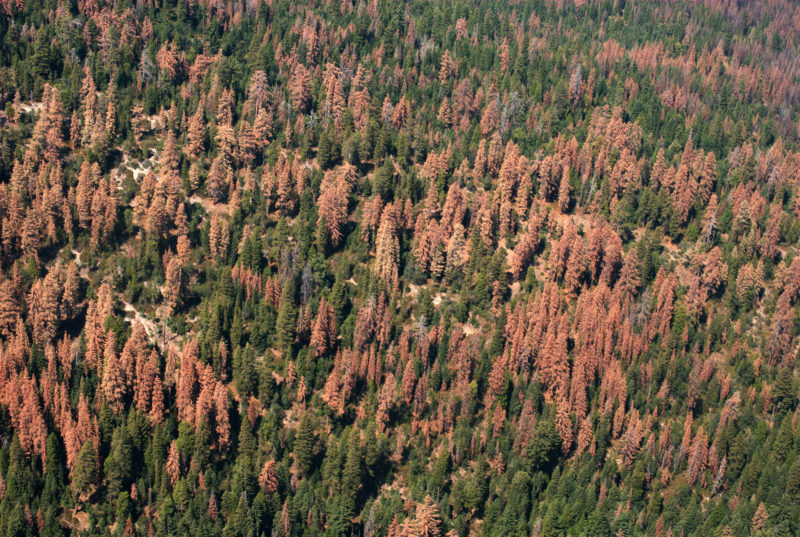
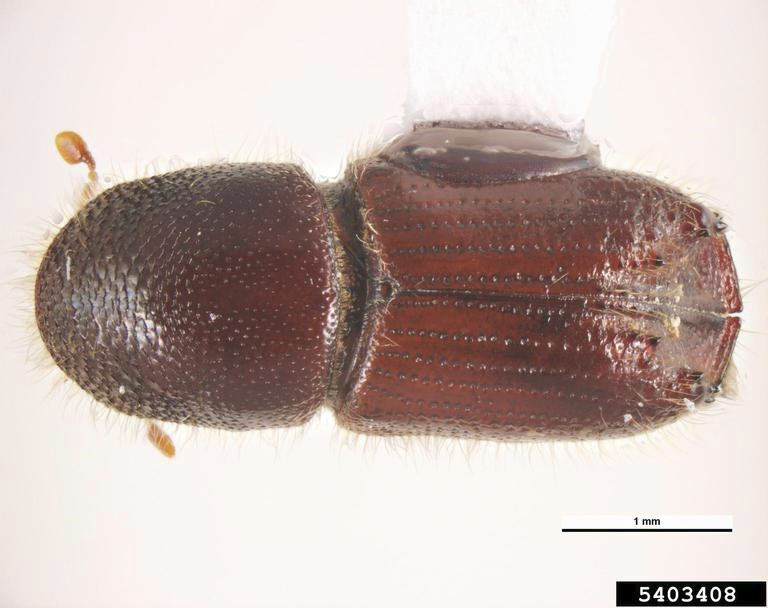
Common in our area, and targets ponderosa pine, Jeffrey pine, limber pine and lodgepole pine. It attacks young pines up to 10 inches in diameter, but may attack larger trees during extreme drought and large-scale infestations.
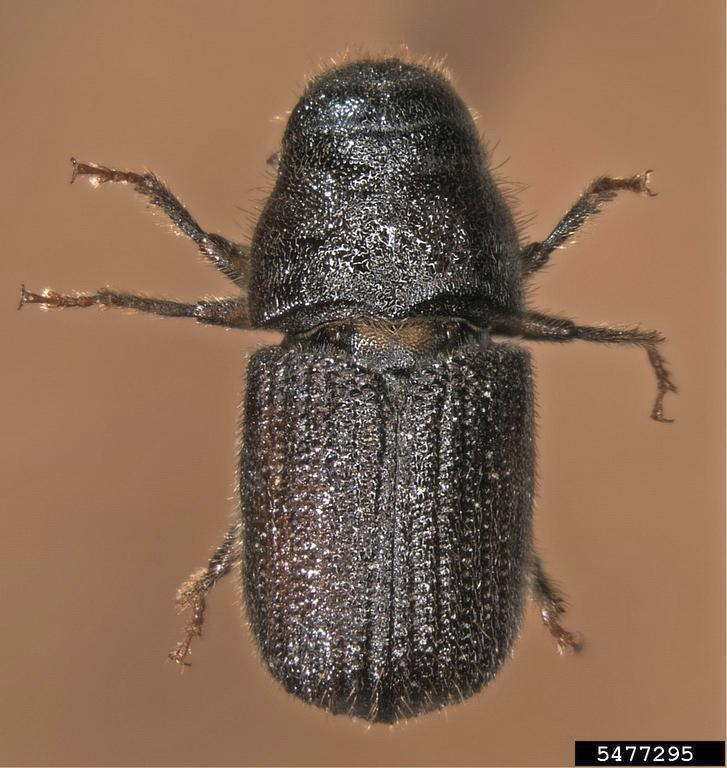
Targets pines, including ponderosa, sugar, western white, coulter, and whitebark pines. It is the main insect pest of mature and overmature pine. Trees weakened by drought, lightning, fire, and wind are susceptible to this beetle, which has the potential to cause mass mortality events.
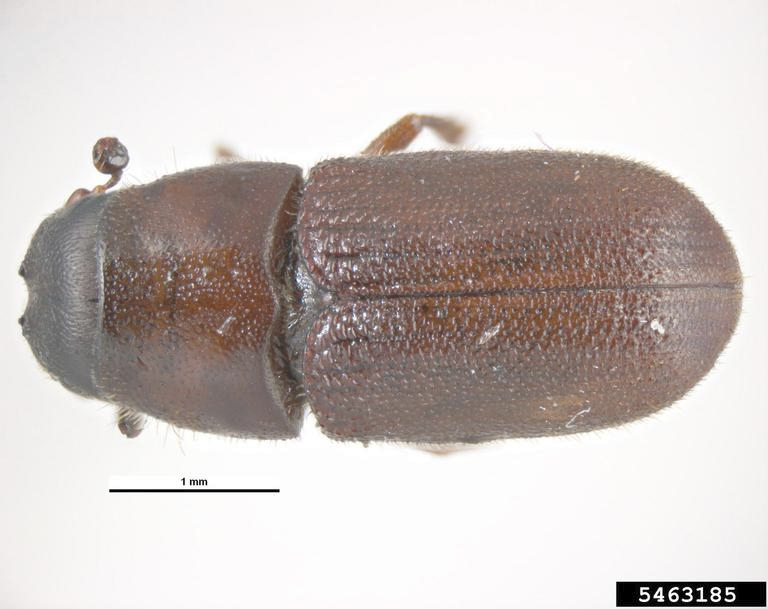
Hosts are Coulter pine and ponderosa pine. It is the most destructive insect pest of these pines in California.
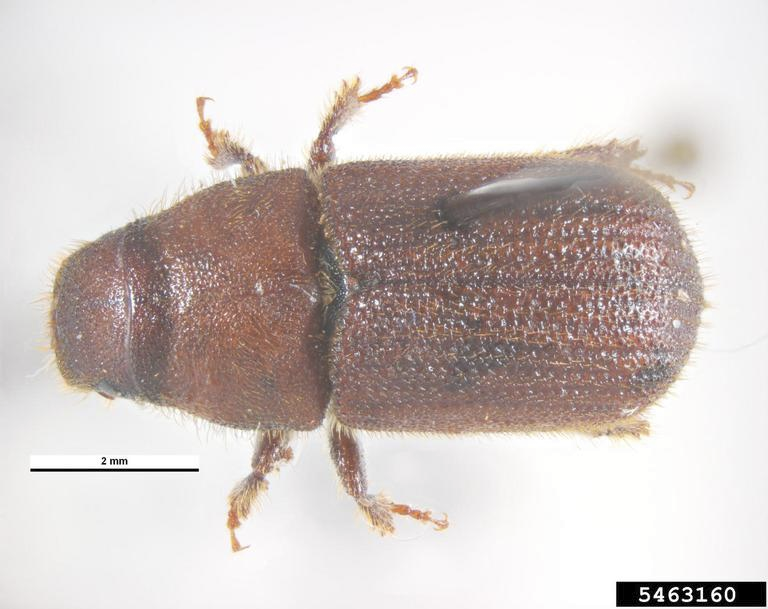
Targets all pines in California.
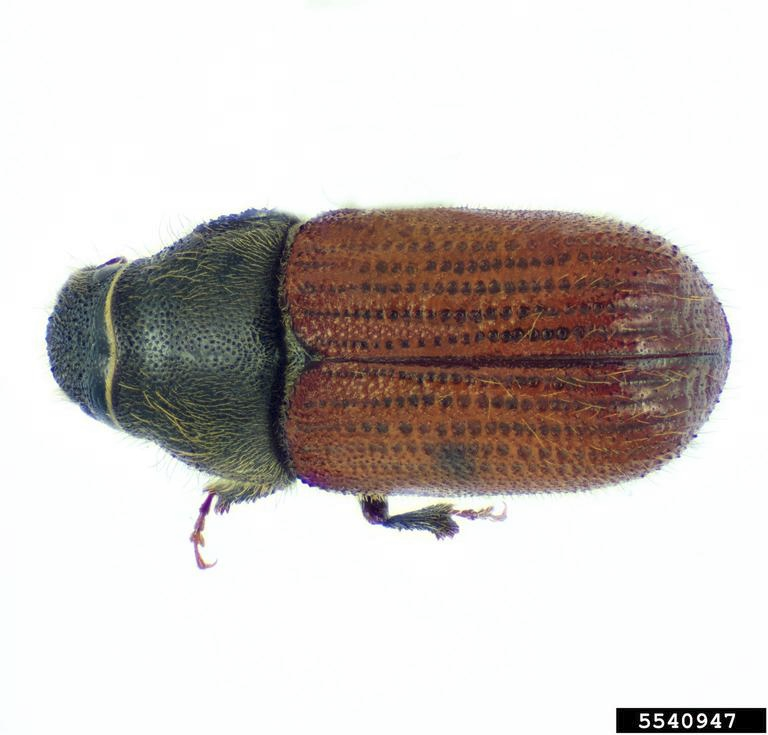
Typically targets mature (>14” diameter) Douglas-fir trees, across most of the West. The beetles are drawn to and enter freshly cut or downed material.
University of California Agriculture and Natural Resources (UCANR) has a comprehensive website including identification and management of bark beetle infestations: Bark Beetles Management Guidelines–UC IPM. The rest of this section on bark beetle is excerpted from the UCANR. There is much more information on their website.
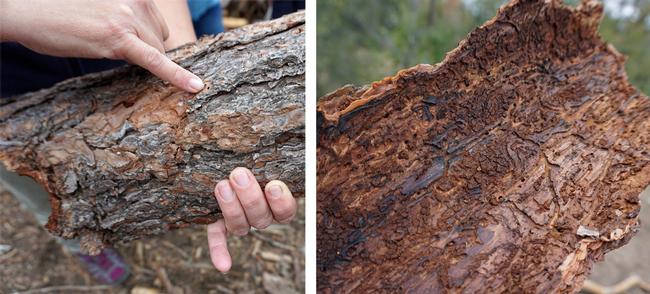
Bark beetles mine the inner bark (the phloem-cambial region) on twigs, branches, or trunks of trees and shrubs. This activity often starts a flow of tree resin in conifers, but sometimes even in hardwoods like elm and walnut. The resin flow (pitch tube) is accompanied by the sawdust-like frass created by the beetles. Frass accumulates in bark crevices or may drop and be visible on the ground or in spider webs. Small emergence holes in the bark are a good indication that bark beetles were present. Removal of the bark with the emergence holes often reveals dead and degraded inner bark and sometimes new adult beetles that have not yet emerged. Bark beetles frequently attack trees weakened by drought, disease, injuries, or other factors that may stress the tree. Bark beetles can contribute to the decline and eventual death of trees; however, only a few aggressive species are known to be the sole cause of tree mortality.
In addition to attacking larger limbs, some species such as cedar and cypress bark beetles feed by mining twigs up to 6 inches back from the end of the branch, resulting in dead tips. These discolored shoots hanging on the tree are often referred to as “flagging” or “flags.” Adult elm bark beetles feed on the inner bark of twigs before laying eggs. If an adult has emerged from cut logs or a portion of a tree that is infected by Dutch elm disease, the beetle’s body will be contaminated with fungal spores. When the adult beetle feeds on twigs, the beetle infects healthy elms with the fungi that cause Dutch elm disease. Elms showing yellowing or wilting branches in spring may be infected with Dutch elm disease and should be reported to the county agricultural commissioner.

Except for general cultural practices that improve tree vigor, little can be done to control most bark beetles once trees have been attacked. Because the beetles live in the protected habitat beneath the bark, it is difficult to control them with insecticides. If trees or shrubs are infested, prune and dispose of bark beetle-infested limbs. If the main trunk is extensively attacked by bark beetles, the entire tree or shrub should be removed. Unless infested trees are cut and infested materials are quickly removed, burned, exposed to direct sunlight, or chipped on site, large numbers of beetles can emerge and kill nearby host trees, especially if live, unattacked trees nearby are weakened or stressed by other factors. Never pile infested material adjacent to a live tree or shrub. Preventative measures (below) are the best management tools to improve forest health and resilience to bark beetle attacks.
Before initiating any limb or tree removal with chainsaws, please be sure you’re practicing chainsaw safety. The Husqvarna company has a youtube channel with lots of good safety information, including personal protective equipment (PPE) and technique.
Forests are dynamic systems, and we shouldn’t feel a need to keep them exactly the way they are, but instead embrace natural change. This is important when considering tree species present now and what will be present in the future. For example, have you noticed that after fire or after thinning, more hardwood species (oaks, etc) come back than pines? This is a natural transition for our elevation. In some cases, planting conifers is appropriate, but in others, embrace that shift and the health of the natural trajectory of our mixed conifer/hardwood forest system.
Plant only species properly adapted to the area, while also considering future climate and pre-adaptation to expected conditions. Read the next section for more information on how to do that, and where to seek help. Learn the cultural requirements of trees, and provide proper care to keep them growing vigorously. Healthy trees are less likely to be attacked and are better able to survive attacks from a few bark beetles. Where bark beetles have been a problem, plant nonhost trees if possible, or ensure that planted trees have access to resources that allow them to flourish and not have weakened pest defenses. For instance, incense-cedars (Calocedrus decurrens) and oaks in our area rarely experience widespread mortality from bark beetles. A mixture of tree and shrub species in planted landscapes will reduce mortality resulting from bark beetles and wood borers.
“Where are these seeds sourced from?” is an important question to ask at the nursery, or wherever you choose to source the trees from. Seed Zones were developed by CAL FIRE, and indicate areas of similar physiography (soil, elevation) and climate. Our seed zone is 525, as depicted in this Tree Seed Zone Map.
Sourcing plants grown with seed locally or within one’s seed zone has been a standard recommendation, to give the plants adapted to your area a better chance of success. But you would be right to think about climate change, and the success of your plantings based on projected drought and drier conditions.
Approaches to consider:
Additional research supports planting not in the traditional rows, or “pines in lines”, format when we traditionally think about plantations, but, rather, in clumps with openings between them, emulating historic patterns and reducing potential fire severity (Larson and Churchill 2012, North et al. 2018).
In sum, different seed sources from further south or downslope could be a climate-smart choice. Variation is key! And, as always, forestry professionals are available to discuss these kinds of questions. They can also recommend species to plant that are appropriate for your soils, elevation, topography, and projected climate conditions.You may be eligible for financial assistance with procuring seedlings and planting labor through the nonprofit One Tree Planted. Contact: Brittney Burke (Brittney@onetreeplanted.org). Further financial resources and planning assistance can be provided by your local resource conservation district and the Natural Resources Conservation Service (NRCS).
Pay particular attention to old, slow-growing trees, crowded groups of trees, and newly planted trees in the landscape. Large nursery stock or transplanted trees, notably oaks and pines, can become highly susceptible to bark beetles or wood borers after replanting. Transplanting success depends on the tree species and its condition, appropriate tree and site selection, characteristics of the planting site, the season of the year, the transplanting method, and follow-up care. Stresses placed on a tree caused by poor planting or planting at the wrong time of year, lack of proper care afterwards, or the planting of an inappropriate species for the site will increase a tree’s susceptibility to bark beetles or wood borers.
Prevention is the most effective method of managing bark beetles and related wood-boring insects; in most instances it is the only available control. Avoid injuries to roots and trunks, damage and soil compaction during construction activities, and protect trees from sunburn (sunscald) and other abiotic disorders. Irrigation may be important during dry summer months in drought years, especially with tree species that are native to regions where summer rain is common. Also, dense stands of susceptible trees should be thinned (complete removal of some of the trees) to increase the remaining trees’ vigor and ability to withstand an attack. High-value trees may be sprayed with insecticides to prevent beetle attacks. Consult with professionals for insecticide recommendations. Monitoring of the property on a regular basis will help spur mitigation activities.
Irrigate when appropriate around the outer canopy, not near the trunk. Avoid the frequent, shallow type of watering that is often used for lawns. A general recommendation is to irrigate trees infrequently, such as twice a month during drought periods. However, a sufficient amount of water must be used so that the water penetrates deeply into the soil (about 1 foot below the surface). The specific amount and frequency of water needed varies greatly depending on the site, size of the tree, and whether the tree species is adapted to summer drought or regular rainfall.
Prune infested limbs, and remove and dispose of dying trees so that bark- and wood-boring insects do not emerge and attack other nearby trees. Timing of pruning is important; avoid creating fresh pruning wounds during the adult beetles’ flight season. Do not prune elm trees from March to September or pines during February to mid-October.
Do not pile unseasoned, freshly cut wood near woody landscape plants. Freshly cut wood and trees that are dying or have recently died provide an abundant breeding source for some wood-boring beetles.
Tightly seal firewood beneath thick (10 mil), clear plastic sheets in a sunny location for several months to exclude attacking beetles, and kill any beetles already infesting the wood. To be effective, solar/plastic treatment requires vigilance and careful execution. It is important to keep wood piles small, use high-quality clear plastic resistant to UV (ultraviolet light) degradation, and thoroughly seal edges and promptly patch holes to prevent beetles from escaping.
For more information on cultural controls, see the publications by Donaldson and Seybold 1998 (PDF) and Sanborn 1996.
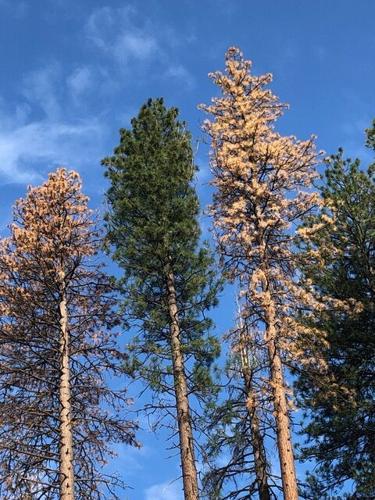
When bark beetles attack trees, natural enemies are attracted to feeding and mating bark beetles. The two main groups of natural enemies are predators and parasites. Predators are more important in regulating bark beetle populations than parasites. Natural enemies are unlikely to save an infested tree, but they can reduce bark beetle population size, thereby reducing the number of nearby trees that are attacked and killed by bark beetles. The release of predators and/or parasites into sites infested with bark beetles has not been an effective tactic to suppress bark beetle populations.
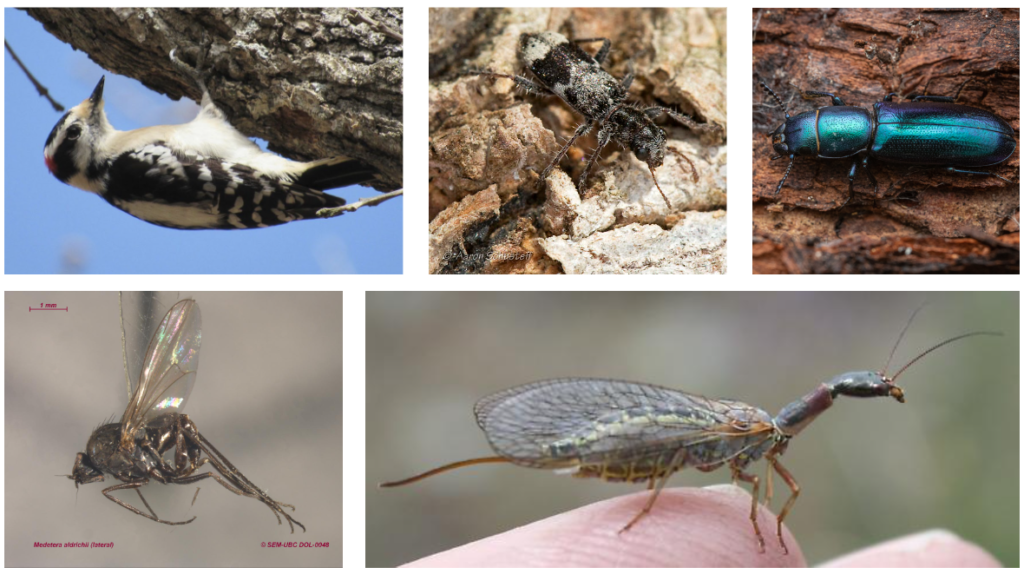
The following natural enemies attack the western pine beetle, but rarely control it: woodpeckers, several predaceous beetles such as the black-bellied clerid (Enoclerus lecontei) and a trogossitid beetle (Temnochila chlorodia), a predaceous fly (Medetera aldrichii), snakeflies, and parasitic wasps.
Bark beetles locate mates and attract or repel other individuals of the same species by emitting species-specific airborne chemicals called pheromones. Pheromones are naturally occurring chemicals that are widely used as baits to monitor bark beetles by attracting them to traps. These baits are especially important for detecting invasive species. Professional foresters have sometimes controlled or suppressed small local populations of bark beetles by using attractant pheromones in traps, and repellent pheromones and other behavioral chemicals to deter beetles from valuable trees. Some behavioral chemicals are being used experimentally on an area-wide basis to protect stands of forest trees. The interactions among host trees and beetles and their pheromones are complex and often poorly understood. Researchers are refining the reliability of pheromone-based management techniques. Behavioral chemicals are currently recommended for use only by specially trained professionals familiar with bark beetle management. Landscape professionals and home gardeners should consult with local California Cooperative Extension specialists if they are interested in this management option.
For those with Douglas-fir trees, check out MCH Bubble Caps.
Nevada County options: Green Waste Disposal | Nevada County, CA
Note that Waste Management does not accept the following as green waste:
Chipping and green waste resources may be available from the Fire Safe Council of Nevada County.
UCANR publication that includes “what to do with slash” on pg 7-8:
Forest Stewardship Series 15: Wildfire and Fuel Management.
UCANR forest stewardship assistance:
Forest Stewardship – Forest Research and Outreach.
Removal of invasive Himalayan blackberry must include removal of canes and roots in order to be effective.
Roots broken off in the soil during pulling and canes touching the ground can both resprout. Dig roots out when the soil is loose and moist rather than compacted and dry. Canes can also be cut after the plant flowers in the summer. Blackberry can regrow in loose, open soil even after you’ve completely removed existing plants. Areas where blackberry has been pulled should be replanted with natives, and revisited for several years to ensure there is no blackberry re-growth.
Blackberry roots and even canes that are touching the ground can re-root, so proper disposal is key. Oxbow Farm recommends collecting roots into a pile that one can keep an eye on while the roots dry out, and cutting and placing canes in a separate pile. Once they dry, they can be spread around as a spiky mulch. Adding them to your burn pile is also an option. Note that Waste Management in Nevada County does not accept blackberry!
More information about blackberry and removal from UCANR:
Wild Blackberries Management Guidelines–UC IPM.
Like blackberry, Scotch broom will regrow from its roots. Roots can be very difficult to remove completely via pulling. Pulling also loosens the soil and opens up light for broom seeds, which remain viable for up to 80 years in the soil. Individual plants can produce up to 18,000 seeds, so there is a strong chance that they’re around. While young plants with small roots can be easily pulled in winter or spring, successive cuttings at ground level (and damage to any exposed roots) are more effective for mature plants. Cutting new growth at the base of the plant for two years in a row has anecdotally resulted in efficient removal.
What to do with cuttings? Above-ground cuttings can continue to mature even after they’ve been cut, resulting in the release of potentially thousands of seeds and new plant growth. Cuttings with buds, flowers and seeds need to be contained. Note that Waste Management in Nevada County does not accept Scotch broom. Cuttings can be burned.
For chemical control of Scotch broom, see the “Chemical Control” section of this UCANR webpage: Brooms Management Guidelines–UC IPM.
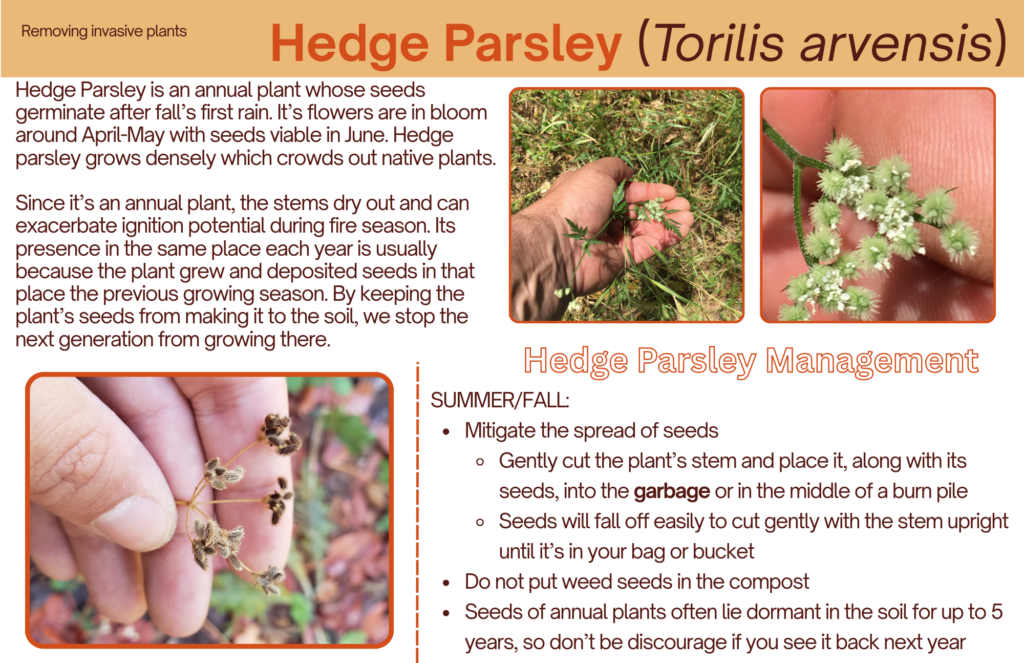
Have you ever taken a walk off the beaten path in the Sierra Foothills and found your shoe laces, socks, and maybe even your pants with plant seeds that stick like Velcro? If you have, then Hedge Parsley (Torilis arvensis) needs no introduction. Related to carrots, this little plant was introduced to North America via Europe and has spread tenaciously. Hedge Parsley is an annual plant whose seeds germinate after fall’s first rain. It’s flowers are in bloom around April-May with seeds viable in June. Hedge parsley grows densely which crowds out native plants. The seed pods are uncomfortable for people and animals which feel next to impossible to remove from clothing. Since it’s an annual plant, the stems dry out and can exacerbate ignition potential during fire season. We tend to find it in places with partial to full sunlight like the sides of trails, backyards, and garden planters.
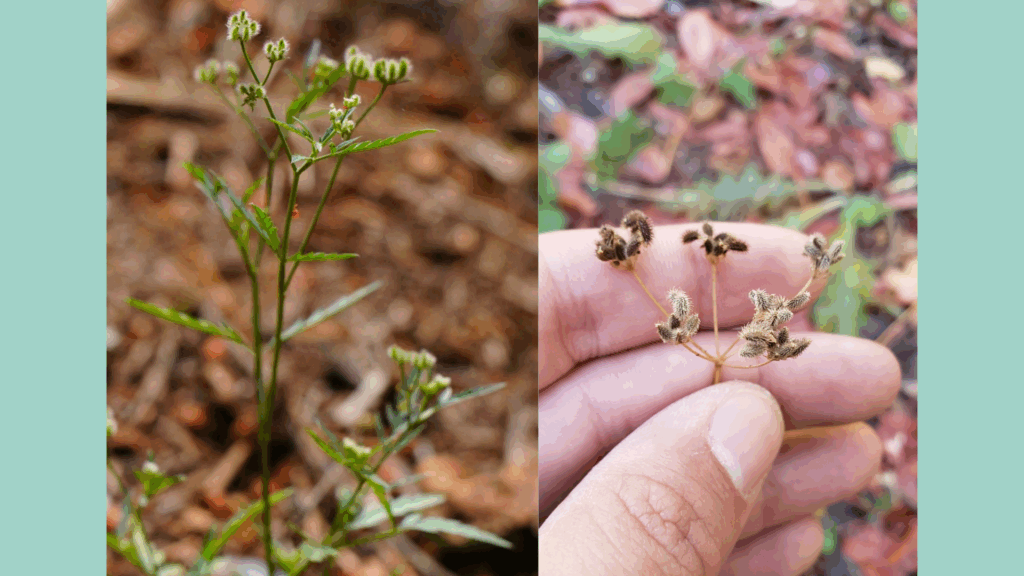
At this point in the year Hedge Parsley will be dry and its seeds will find their way onto you and your pets with ease. However, not all is lost! If you’re tired of this plant, I recommend you gently cut the plant’s stem and place it, along with its seeds, into the garbage or the middle of a burn pile. Seeds will fall off easily, so cut gently and hold the stem upright until it’s in your bag or bucket. Be wary of placing weed seeds into compost!
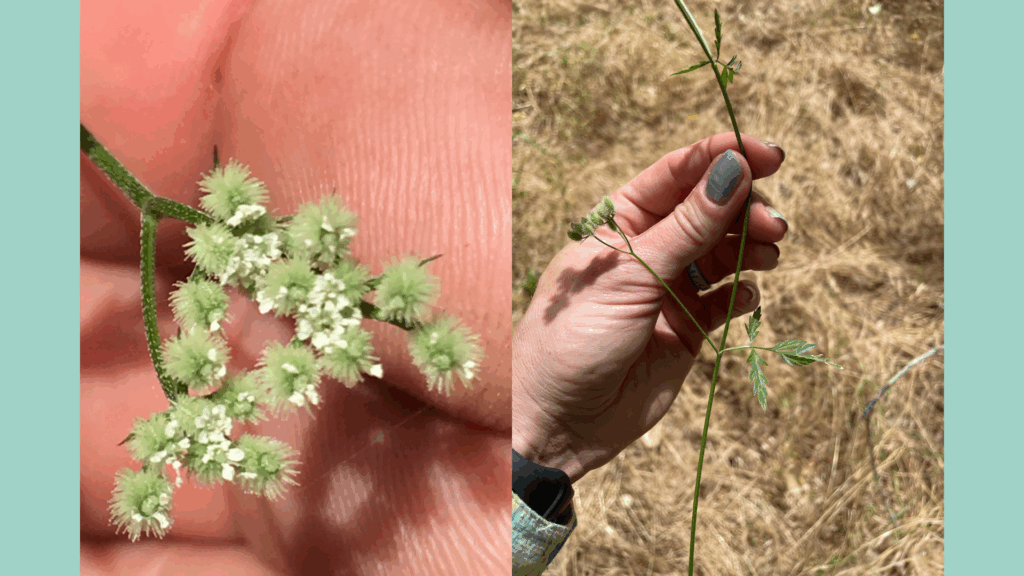
Since Hedge Parsley is annual, its presence in the same place year to year is usually because the plant grew and deposited seeds in that place the previous growing season. By keeping the plant’s seeds from making it to the soil, we stop the next generation from growing there. An important reminder: seeds of annual plants often lie dormant in the soil for up to 5 years, so don’t be discouraged if you see Hedge Parsley back next year! Persistence and diligence will serve you well in your fight against Hedge Parsley.
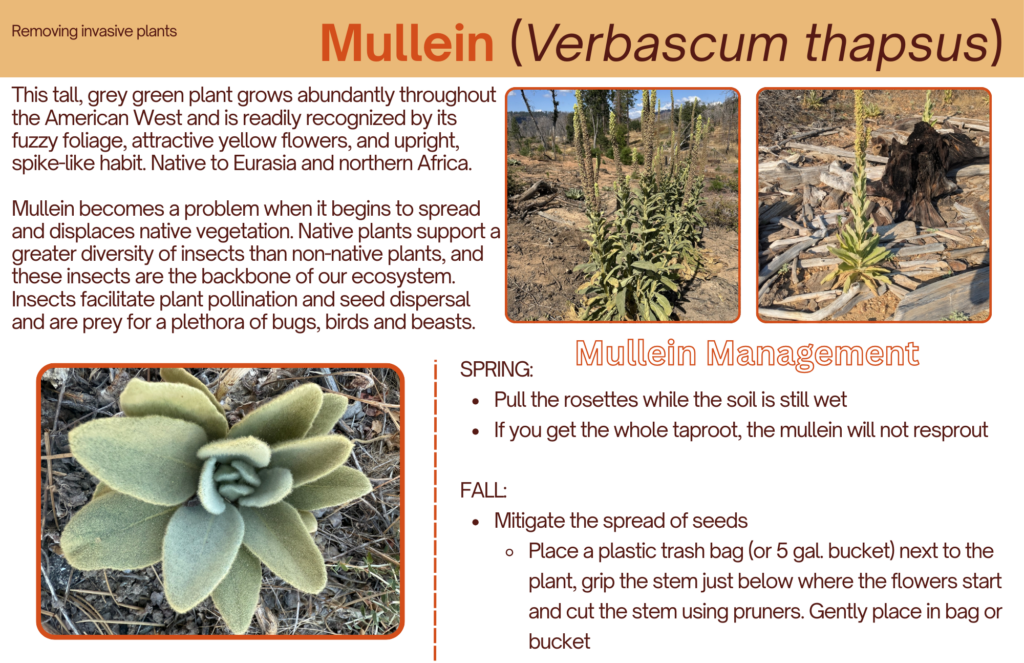
This tall, grey green plant grows abundantly throughout the American West and is readily recognized by its fuzzy foliage, attractive yellow flowers, and upright, spike-like habit. Native to Eurasia and northern Africa, mullein (Verbascum thapsus) is controversial amongst plant people, being lauded by some for its medicinal qualities and denounced by others as a weed.
As we get into the weeds we’ll be discussing mullein’s pros, cons, and how we can strike a responsible compromise.

What’s an invasive weed anyway? For our purposes, a weed is a plant, introduced by humans, from someplace else that is able to spread without any ecological checks and balances. A great example we’re all familiar with is Himalayan blackberry (Rubus armeniacus), native to Eurasia (noticing a pattern here?) and dominant in most wet habitats in western Nevada County. Animals eat the berries and spread the seeds, but there’s no significant pressure from insects, fungus, or other biota to strike some sort of balance by thinning seeds or young plants. In contrast, take a look at the acorn litter around a black oak (Quercus kelloggii) this fall. You’ll notice that many of the acorns are occupied by insects that have bored little holes into the center. This, along with other ecological pressures such as deer browsing and fire, helps oak populations stay balanced on the landscape.
The difference between mullein and blackberry is that sometimes, but not always, mullein can get out of hand. Many times it can be found as an isolated plant in sunny, exposed sites such as vacant lots, powerline clearances, and construction sites. Lately I’ve been seeing it where significant clearing has taken place through mastication or because of chip trucks and work trucks tearing up the topsoil. Mullein is most vivacious in disturbed soils, so that’s where you’ll see it acting more “invasive.”
When mullein becomes a problem is when it begins to spread year to year and displaces native vegetation like tarweeds (Madia sp.), purple needlegrass (Stipa pulchra), and lupines (Lupinus sp.). Native plants support a greater diversity of insects than non-native plants, and these insects are the backbone of our ecosystem. Insects facilitate plant pollination and seed dispersal and are prey for a plethora of bugs, birds and beasts.
So when should you do something about mullein? It’s completely up to you when, or if, you decide to manage mullein. The perspective I maintain, particularly with useful weeds like mullein, is centered around ecological balance. I may want to harvest the plant and benefit from its medicinal value, but I also want to support my veggie garden by promoting nearby pollinators with the native flora. Consider controlling or eradicating mullein in wild places, and developing a garden bed for “weedy” plants with value, such as mullein or lemon balm, where you can control their spread.
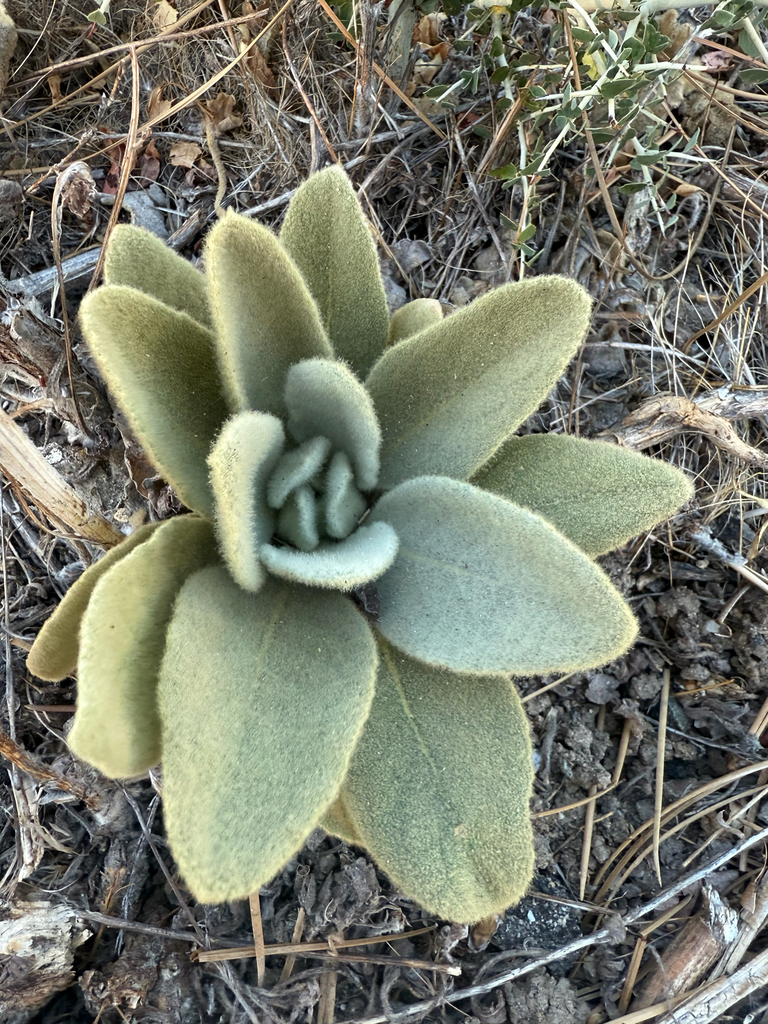
Mullein, like many weeds, is controlled best through persistence and elbow grease. Your number one priority will be to keep the plant from developing and spreading seeds: one plant can develop thousands of seeds smaller than a grain of rice. The easiest way to prevent this is to pull the little rosettes in the spring while the soil is still wet. If you get the whole taproot, the plant will not resprout and your work for the year will be done.
That’s all fine and dandy, but it’s September and I’d be surprised if you have young mullein in your yard. Odds are they’re big, turning brown, and already full of seeds. Don’t worry though, with weeds there is always hope! Our goal is now to mitigate the spread of more seeds. What we’ll do is place a plastic trash bag or 5-gallon bucket next to our plant, grip the stem just below where the flowers start, cut the stem below your hand using hand pruners, and gently place the inflorescence (a general botanical term for a flowering structure) into the bag or bucket.
I would like to reiterate that mullein is promoted through soil disturbance and spread through mud tracking on tires and treads. The best way to control weeds is to discourage their spread. Be mindful of how you interact with the landscape!
For more information check out the California Invasive Plant Council’s mullein profile.
What you need to know from Cal Fire: Before you Burn – check this site to find out when it is safe and legal to burn!
Nevada County pile burning guidance: Manage Your Burn Pile Safely. Note that you cannot pile burn within Nevada City and Grass Valley city limits. If you live in another city, please check your local ordinances.
Check for workshops from UCANR, like this (past) one:
Pile Burning Workshop Webinar – Placer Resource Conservation District.
Placer Resource Conservation District regularly hosts online and in-person training events, particularly in the fall and winter months.
Starting a controlled fire on the land for ecological and human benefit, also known as “prescribed fire”, is an excellent tool that landowners can use. The fire-adapted forests in California have been suppressed from fire for a very long time, resulting in the high-density, disease-prone forests that are seen today. Historically, fires burned every 8-20 years in the Sierra Nevada mixed conifer landscape. Clumps of trees, openings, and individual trees made up the spatial structure of the forests, which resulted largely from fire.
Benefits of prescribed fire include:
Careful planning and certain criteria must be met for burning to occur. Fuel moisture, weather, and smoke dispersal conditions are just a few. Prep work, a burn plan, appropriate permits and notifying the right people are the framework for a safe, successful burn. But it is possible, and you may find that the more you learn, the more you become an advocate yourself!
Attend virtual and in-person training sessions! Attending prescribed burning workshops to learn how to plan, prepare, and burn on your property for little to no cost is extremely helpful.
Placer Resource Conservation District (RCD):
Prescribed Burning on Private Lands – Placer Resource Conservation District
Placer RCD has an email listserv that advertises in-person and online training events during the burn season. Contact the Prescribed Fire Program Manager, Cordi Craig, to be notified of future training events.
Prescribed Burn Associations (PBAs):
Prescribed Burning Permitting Questions:
There are contractors who will write burn plans for you, prep your property, and can do the burning itself.
Contact:
Volcano Creek Enterprises, Inc.
Amanda Godon
(530) 367-5629
P.O. Box 932, Foresthill, CA 95631
Prometheus Fire Consulting (Based in San Jose)
Info@PrometheusFireConsulting.com
(408) 807-1963