SIERRA STREAMS
Watershed Monitoring, Research, and Restoration
At Sierra Streams Institute, we believe that every restoration project is unique, requiring tailored approaches to achieve our ultimate objective: fostering ecosystems capable of sustaining themselves in a healthy, balanced manner for decades to come. Recognizing the intricate complexity of ecosystems, we emphasize the importance of stewardship-based relationships with the land. Our restoration projects are guided by key principles aimed at enhancing native biodiversity, proactively addressing the impacts of climate change, and mitigating ongoing environmental degradation caused by human activities.
Employing a tailored approach adapted to the unique nature of each restoration project, SSI forms stewardship-based relationships to address ecosystems’ inherent complexity. With a goal of fostering self-sustaining, balanced ecosystems with benefits lasting for decades to come, SSI applies restoration methods and monitoring designed to:
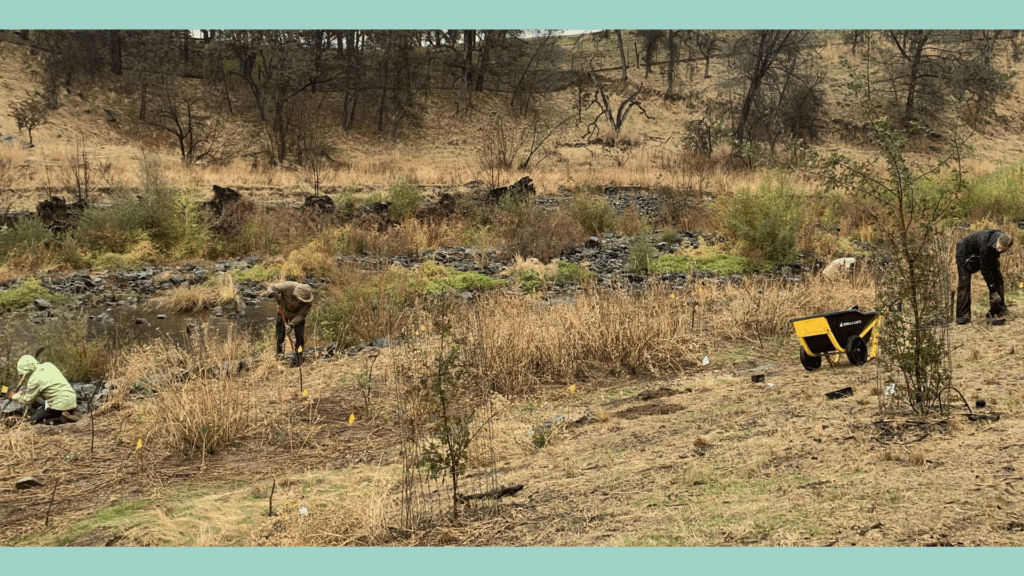
Ecological restoration aims to initiate, recreate, or accelerate a disturbed ecosystems’ recovery. Ecosystems are complex groups of organisms, landscapes (including soil and other nonliving elements), and processes; the “structure” of an ecosystem refers to how these components interact with each other, while the “function” of an ecosystem refers to the resulting properties of that system.
For example, animals, one fundamental component of an ecosystem, impact ecosystem function and stability by influencing plant propagation, as well as other ways, too! The life activities of animals feeding, excreting, and moving, influences their surrounding environment. Animals cycle nutrients when they consume plants, and then excrete nutrient-rich waste, which in turn helps promote and feed plant growth. Additionally, animals disperse seeds from the plants they consume, which impacts the plant communities by promoting plant regeneration and biodiversity.
Ecosystem function considers the big picture, combining all of the processes, including biological and physical interactions within an ecosystem, and considering how these aspects work together. System function is fundamental, and critically important, to the health of an ecosystem. An ecosystem’s structure and function become altered when disturbance results in environmental change. This disturbance and damage comes in many forms, including damming rivers, intensive resource extraction, overgrazing, and through natural disasters such as floods and fire.
Restoration actions and activities involve careful human intervention designed to address the impact of these disturbances and move natural systems toward improved health and function. Methods of restoration often focus on habitat enhancement designed to increase suitability for target species, or mitigation of future damage. Perhaps most importantly, restoration is not “one size fits all.” Additionally, it doesn’t always work!
Restoration activities are based on understanding the history of the site’s structure and function, and it’s important to exercise humility with respect to what we think we know and what we don’t know! This makes tracking restoration results and outcomes through long term monitoring exceptionally important. Through careful observation we can continue to build understanding about restoration method efficacy.
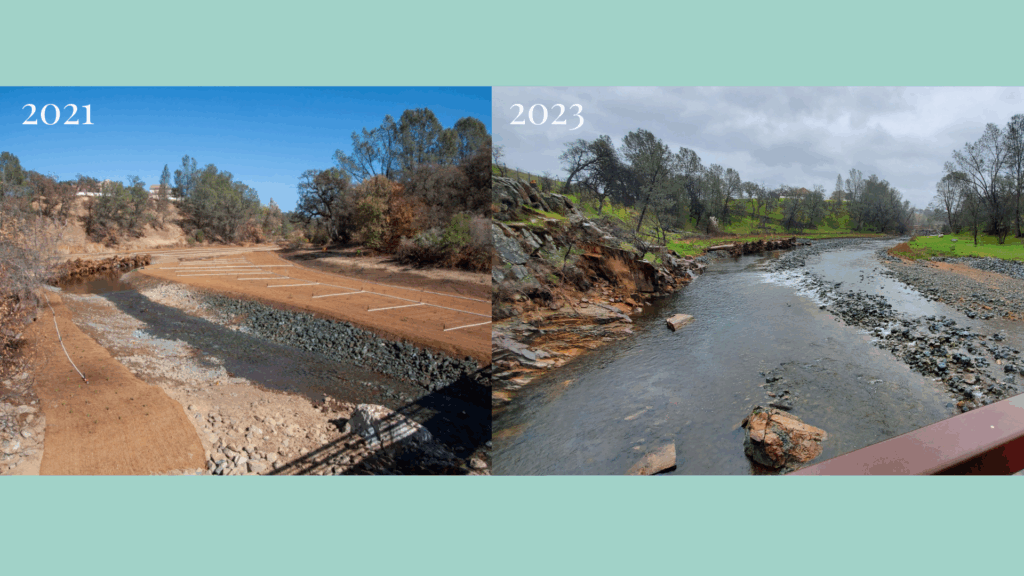
Restoration ecology is the scientific study of repairing disturbed ecosystems. Leveraging 30 years of monitoring experience and expertise, SSI’s Restoration Program includes careful observation and tracking of changes over time to assess system function, determine project success, evaluate ecological effectiveness, and provide science-based answers to advance the practice of restoration both on site and beyond.
Community science is a natural fit for restoration, as many projects are locally initiated, involve community volunteers, and include collaborations among a diverse group of interested parties. Each restoration project SSI initiates provides an opportunity to restore human relationship with nature, whether it’s through volunteering with SSI, working at a restoration site, or enjoying a book by the creek. Restoration truly puts the “community” in community science!