Vegetation Survey on Dry Creek
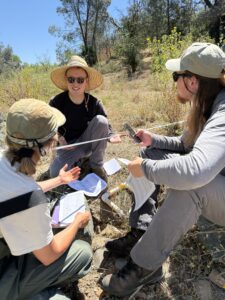
Last week I had the privilege to tag along with our Restoration Team to participate on their vegetat...

Written by Mali Valerio and Helen Fitanides
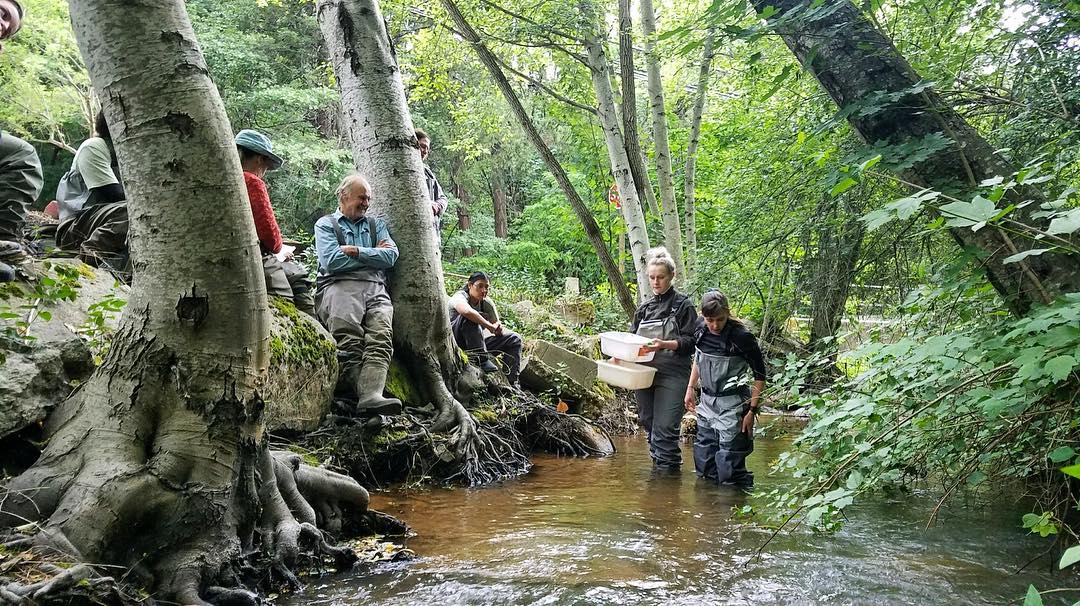
Earlier this year, we sent out a community survey asking for your responses, thoughts, and opinions on our new and more humane method of collecting benthic macroinvertebrates (BMI). Thank you to all who responded! We really enjoyed reading through your comments at the end. We found that the SSI community were happier now that we’ve implemented a more humane BMI collection method using an anesthetic. However, I wanted to address some comments from that survey that picked up on the elephant still in the room: why do we still kill the bugs?
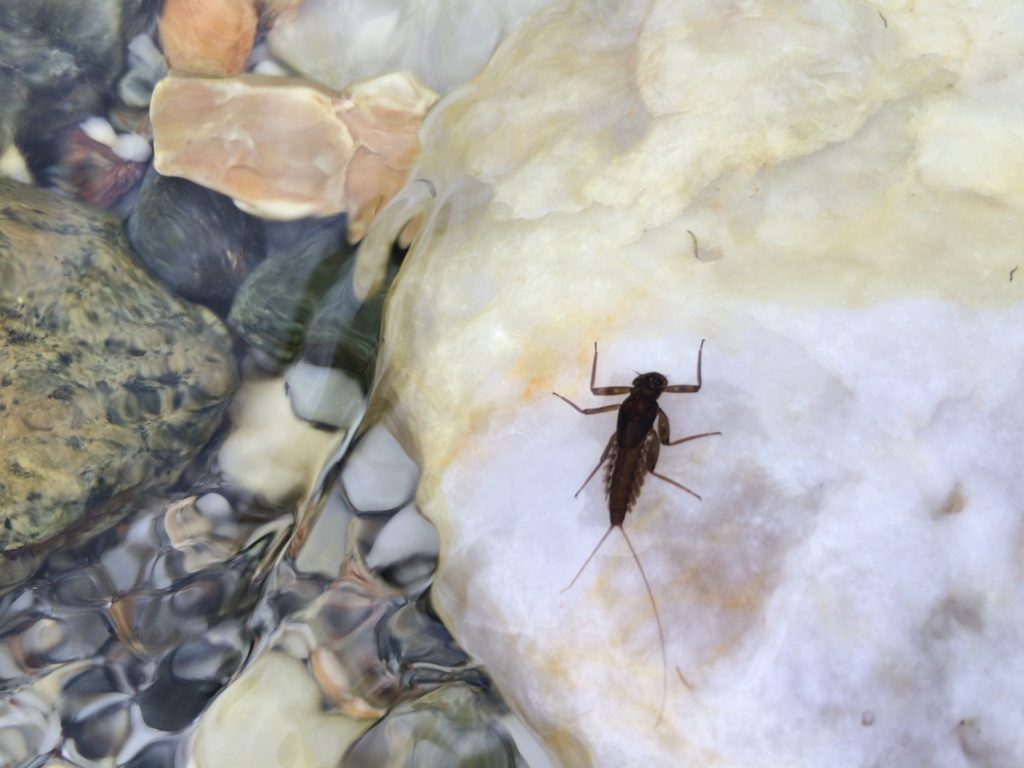
A quick recap on BMI: BMI are the invertebrates that live on the stream bed, typically the larval stages of adult aquatic insects. They act as canaries in the coal mines for the creeks, because they experience the full barrage of conditions that come their way: high flows, low flows, increasing temperatures, sediment from storms, etc. Because BMI have a diversity of habitat preferences, live for a relatively long time in this larval stage, and have species-specific levels of tolerance to stressors and pollution, we can use them as an indicator of overall creek health. If we take a sample from Creek A and find a diverse BMI community with plenty of bugs that need cold, clean water, we can assume that this creek is providing relatively healthy conditions. On the other hand, if we take a sample from Creek B and find a BMI community that is dominated by bugs which can live in pretty much any conditions including polluted conditions, this gives us a red flag that this habitat is probably far from ideal.
In our in-house BMI lab, we do the detailed taxonomy work needed to learn about the BMI communities in different creeks and gather evidence on overall creek health. This is an important part of a full stream assessment, which also takes into account things like shade cover, the composition of the bottom of the creek, presence of algae, and water quality. In order to have the best understanding of creek health, we identify BMI to the taxonomic level of genus, and species where possible. Identifying them only to the level of order or family would give us much less information about the BMI community present at each site, and we are invested in getting the best data possible in our local creeks.
For the vast majority of BMI, we cannot identify them to the level of genus or species whilst they’re alive. For example, sometimes I have to mount the head of a mayfly on a microscope slide to look at a single hair on the mandibles, or other times I am looking at the intricate patterns on the back of caddisflies that, when alive, are living in cases (and thus I can’t see their back without removing them from the casing). We need to preserve the BMI and bring them back to the lab so we can achieve this level of detail.
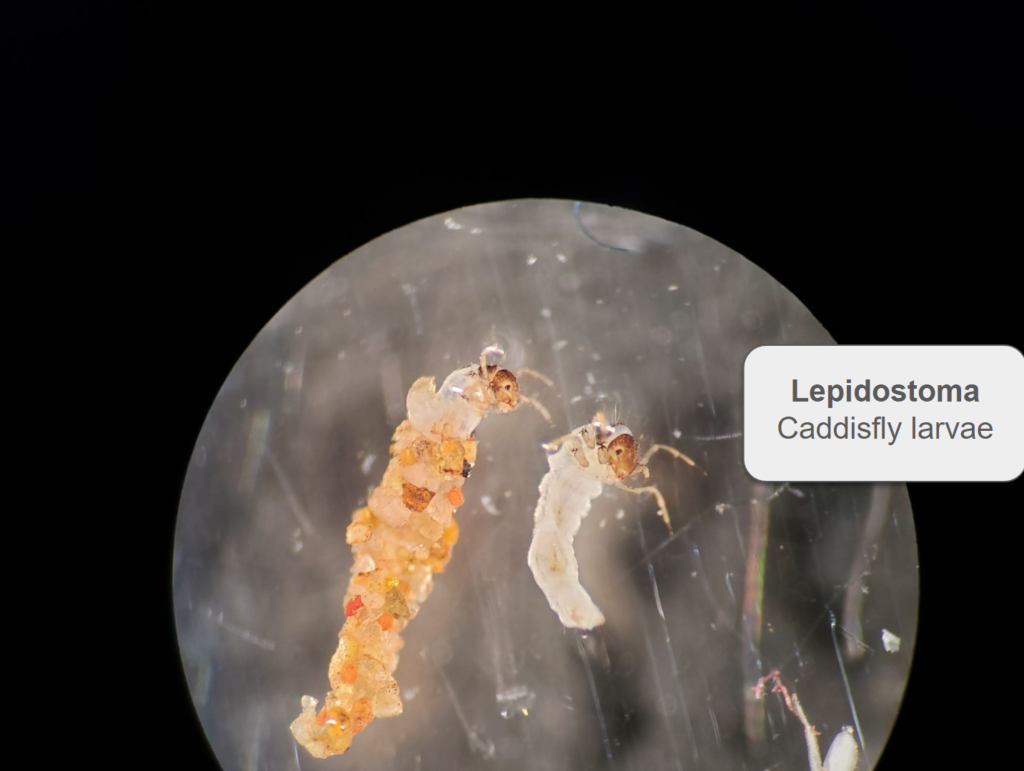
It is totally ironic that, in order to assess stream health, we kill the inhabitants of the creeks. We recognize this acutely and have put in a lot of thought and time into how we collect the BMI humanely and if we can do live field picks instead, where we identify them to order or family, count the numbers of each group that are present in a standardized sample, and then return them to the stream. This is an excellent method for restoration projects and our Restoration Department is implementing this method, but it is not appropriate for the detailed bioassessment work that our research and monitoring team does.
For better or for worse, BMI are excellent stream health indicators because they can live in the creek for multiple years and thus they get exposed to all weather, temperatures, fluctuations in water chemistry, pollutants, and other disturbances. Their community tells us a lot about stream health. And in order to fully understand the community that is present, we collect, kill, preserve, and study them under the microscope. When we sample BMI, we take a very small fraction of the number of BMI actually living in the creek in our samples as a representation of the entire community living in the creek at that time, and this is not known to impact the wider BMI populations.
We welcome feedback and thoughts from all who engage in our work. We looked at using an anesthetic in our BMI collection due to community feedback about how uncomfortable people were collecting the BMI without one. I hope this blog helps answer some questions about why we still kill some of the bugs. Please comment below if you have any lingering questions and I’ll do my best to answer them!