
Did you know that Sierra Streams Institute offers water quality tests and testing packages? Whether it’s straight from your well or that pond out back where your dogs (or kids, or you) love to muck around, SSI offers a number of water quality tests that can be helpful for understanding what’s in your water.
What tests does SSI offer and how much do they cost?
We currently offer the following water quality tests to community members:
- Nitrate
- Phosphate
- Ammonia
- Iron
- Silica
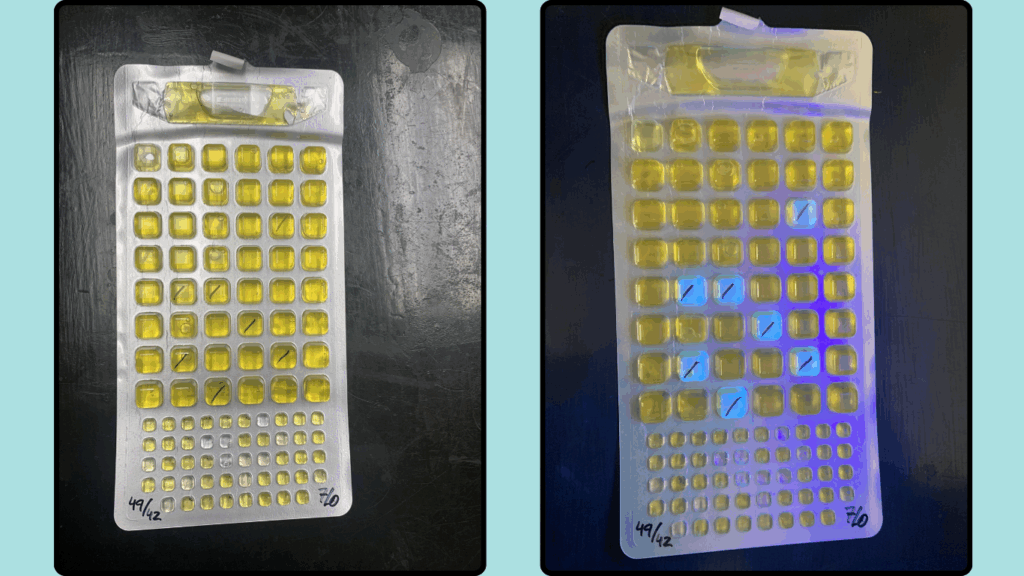
- Total coliforms and E. coli
- Additional analyses possible upon request
Analysis Fees
| Test | SSI Volunteer | Community Member | Community Partner | Business |
| Bacteria: Total Coliform + E. coli | $39 | $51 | $53 | $63 |
| Nitrate | $26 | $35 | $37 | $47 |
| Phosphate (Reactive) | $25 | $39 | $41 | $51 |
| Ammonia | $42 | $66 | $68 | $78 |
| Iron | $25 | $48 | $50 | $60 |
| Silica | $42 | $77 | $79 | $89 |
| Nitrate + Phosphate (Reactive) | $30 | $60 | $62 | $72 |
| Nitrate, Phosphate, Ammonia, Iron | $71 | $75 | $77 | $87 |
Prices are subject to change depending on circumstances such as tariff-based price increases; please communicate with lab staff to secure price.
Send inquiries to lab@sierrastreamsinstitute.org. Please include “Fee for Service: Inquiry” in the subject line.
Why is it important to test for X in my water?
This is a great question, and it depends on what you’re using the water for. Is it drinking water from your well, water you use for your plants or garden, or a recreational pond on your property? If you’re not sure what you want to test for you can read about each test we offer, or reach out to the SSI Chemistry Lab where we can provide recommendations based on your specific needs and concerns.
Read more about some of the reasons to test your water below.
Drinking Water
The EPA has established thresholds for some nutrients (including nitrate) or minerals and E. coli in drinking water. When your water comes from a public utility the utility is required to regularly test and abide by these thresholds. However, if your drinking water comes from a well or natural spring you are the only one with the ability to regularly test the water. Testing your water ensures it’s safe for you and your loved ones (especially the elderly and young kids) to drink. It is recommended that you test your well water annually!
Natural and Recreational Waters
In recreational waters the balance of basic nutrients will inform you about the overall “health” of the system. Nutrients such as Nitrogen (N), Phosphorous (P), Silicon (Si), Sulfur (S), and other elements provide the fundamental chemical “building blocks” of biomolecules like proteins and DNA. Nitrogen and phosphorous are the major nutrients required for aquatic life, and are often bonded to other elements in the form of phosphate (PO4-3), nitrate (NO3–), and ammonium (NH4+).
In natural and recreational waters, these nutrients play a critical role in maintaining aquatic life but in large amounts they can cause excess algal or bacterial growth that is unsafe for aquatic life and humans alike.
Read more about each of our tests here:
Nutrients
Nitrate
Nitrate (NO3–) is an inorganic form of the element nitrogen formed from one nitrogen (N) molecule and three oxygen (O) molecules. Nitrate has a negative charge, and is easily moved by water molecules. Nitrate is readily used by microorganisms like algae to grow, and at high concentrations can lead to undesired algal and bacterial growth in aquatic ecosystems.
High concentrations of nitrate pose a human health risk, particularly for infants and elderly individuals. The EPA threshold for nitrate in drinking water is 10 ppm. Nitrate (NO3–) is converted to nitrite (NO2–)in the body which can bind to our oxygen-carrying hemoglobin, ultimately turning it into methemoglobin which is not able to carry oxygen. Over time, this reduced oxygen-carrying capacity can lead to cyanosis and more severe illness if left untreated.
Phosphate
Phosphate (PO4-3) is an inorganic molecule made of phosphorous (P) and oxygen (O). Like nitrate, phosphate has a negative charge and it is easily taken up by microorganisms such as algae. High concentrations of phosphate in water can lead to excess or undesirable algal and bacterial growth.
There are no limitations to phosphate concentrations in drinking water or waste water, but high concentrations of phosphate and nitrate together commonly indicate contamination. Sources of contamination may include agricultural or waste-water effluent, or sewage contamination.
Ammonia
Ammonia (NH3) is another inorganic molecule formed by nitrogen (N) and hydrogen (H). It is less available for algae to use, but can still be used by some species of bacteria.
In freshwater systems, ammonia can be toxic to some aquatic life such as fishes, in particular salmonid fishes (Oncorhynchus). The EPA limitation for ammonia in freshwater is 17 mg/L in order to protect aquatic life. Sources of ammonia contamination and pollution include agricultural runoff and waste water effluent.
(Ferrous) Iron
Ferrous iron (Fe+2) is a water-soluble form of elemental iron. This means that it stays dissolved in water, and doesn’t carry a color. It is often present in well-water.
The presence of iron in drinking water does not pose a significant health risk, but the EPA does provide a recommendation of concentrations < 0.30 mg/L as higher concentrations can cause aesthetic issues such as taste, tinted water, and staining. Higher concentrations of iron can also promote the presence of iron-eating bacteria, which are not harmful but can create bacterial mats that clog pipes and facilitate the growth of other harmful bacterial species.
Silica
Silica, or silicon dioxide, (SiO2) is a molecule made of silicon (Si) and Oxygen (O). Silica does not carry a charge, but it is important for certain aquatic organisms like diatoms and mollusks to build their shells.
Silica does not pose a risk to human health, and there are no EPA thresholds for Silica in natural or drinking waters. However, high silica in drinking water can lead to cloudy white crusts on glassware.
Bacteria
Total Coliforms
Coliforms are a broad group of bacteria which exist naturally in the environment, particularly in soils. They include species like E. coli which can indicate fecal contamination.
E. coli
E. coli is an indicator bacteria species present in the fecal matter of warm-blooded animals. Not all strains of E. coli are harmful to human health, but as an indicator species they can help us identify contamination from sewage and fecal matter. Contaminated water may carry other bacteria or parasites which are harmful to human health.
The presence of E. coli in drinking water is unsafe by EPA standards. In natural or recreational waters, E. coli concentrations above 320 CFU in a single sample, or above an average of 126 CFU over a 30-day average are above the threshold for safe water.
Read more about what we have to offer on our Chemistry Lab page.