
Hedge Parsley (Torilis arvensis)
Written by Alex Lerch
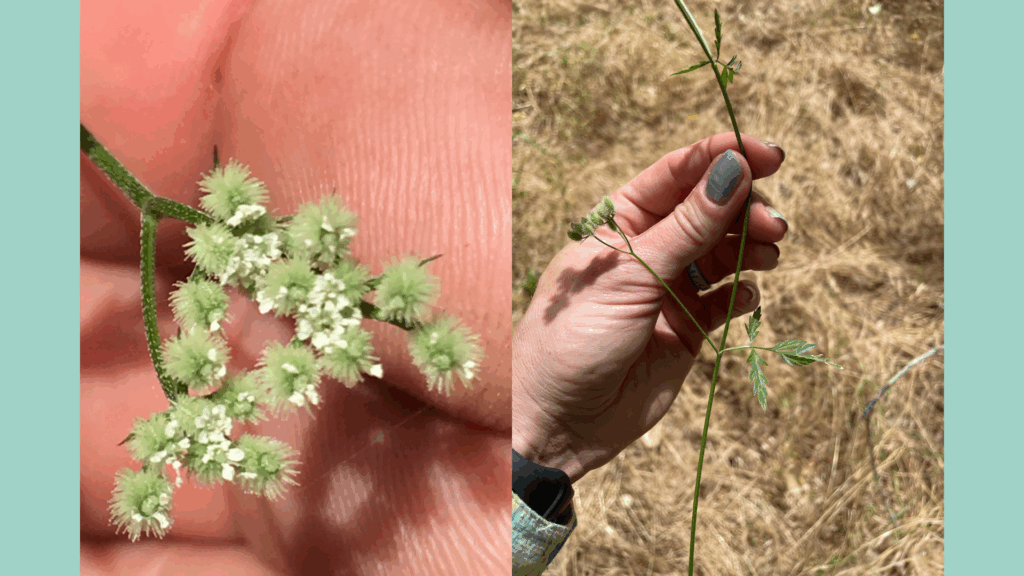
Have you ever taken a walk off the beaten path in the Sierra Foothills and found your shoe laces, socks, and maybe even your pants with plant seeds that stick like Velcro? If you have, then Hedge Parsley (Torilis arvensis) needs no introduction. Related to carrots, this little plant was introduced to North America via Europe and has spread tenaciously. Hedge Parsley is an annual plant whose seeds germinate after fall’s first rain. It’s flowers are in bloom around April-May with seeds viable in June. Hedge parsley grows densely which crowds out native plants. The seed pods are uncomfortable for people and animals which feel next to impossible to remove from clothing. Since it’s an annual plant, the stems dry out and can exacerbate ignition potential during fire season. We tend to find it in places with partial to full sunlight like the sides of trails, backyards, and garden planters.
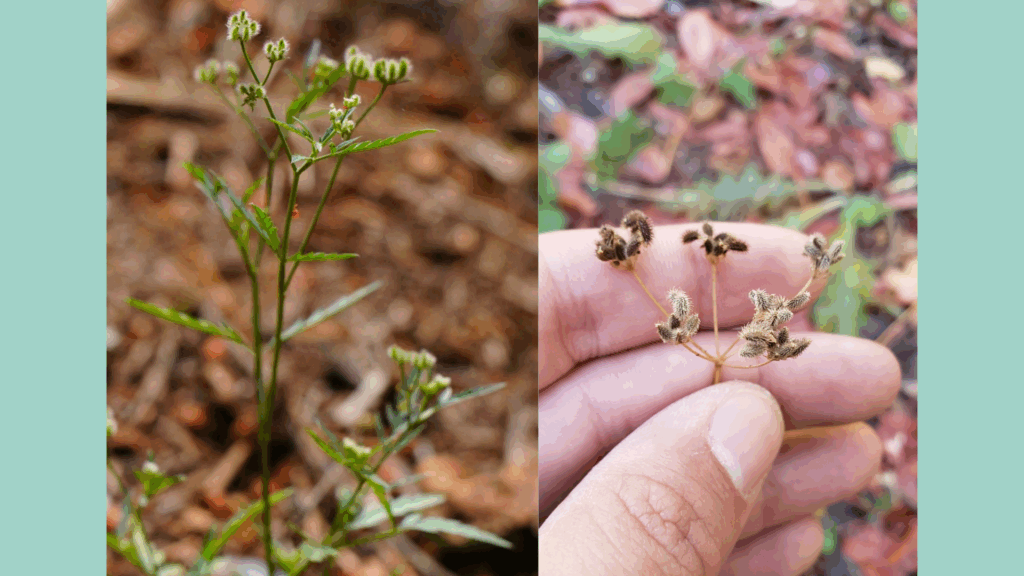
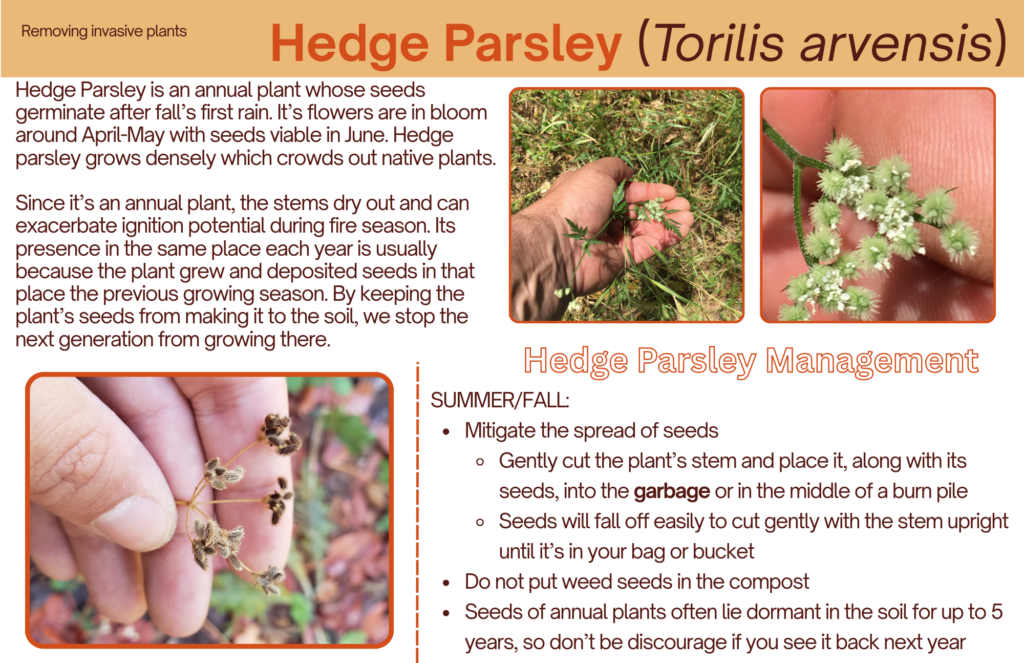
At this point in the year Hedge Parsley will be dry and its seeds will find their way onto you and your pets with ease. However, not all is lost! If you’re tired of this plant, I recommend you gently cut the plant’s stem and place it, along with its seeds, into the garbage or the middle of a burn pile. Seeds will fall off easily, so cut gently and hold the stem upright until it’s in your bag or bucket. Be wary of placing weed seeds into compost!
aprildamanti)
Since Hedge Parsley is annual, its presence in the same place year to year is usually because the plant grew and deposited seeds in that place the previous growing season. By keeping the plant’s seeds from making it to the soil, we stop the next generation from growing there. An important reminder: seeds of annual plants often lie dormant in the soil for up to 5 years, so don’t be discouraged if you see Hedge Parsley back next year! Persistence and diligence will serve you well in your fight against Hedge Parsley.
Wanna learn more? Check out our Resource Toolkit for Landscape-Scale Management in Western Nevada County!