
Mullein: The Most Controversial Weed In The West
This tall, grey green plant grows abundantly throughout the American West and is readily recognized by its fuzzy foliage, attractive yellow flowers, and upright, spike-like habit. Native to Eurasia and northern Africa, mullein (Verbascum thapsus) is controversial amongst plant people, being lauded by some for its medicinal qualities and denounced by others as a weed.
As we get into the weeds we’ll be discussing mullein’s pros, cons, and how we can strike a responsible compromise.

Weed or Remedy? Context matters!
What’s an invasive weed anyway? For our purposes, a weed is a plant, introduced by humans, from someplace else that is able to spread without any ecological checks and balances. A great example we’re all familiar with is Himalayan blackberry (Rubus armeniacus), native to Eurasia (noticing a pattern here?) and dominant in most wet habitats in western Nevada County. Animals eat the berries and spread the seeds, but there’s no significant pressure from insects, fungus, or other biota to strike some sort of balance by thinning seeds or young plants. In contrast, take a look at the acorn litter around a black oak (Quercus kelloggii) this fall. You’ll notice that many of the acorns are occupied by insects that have bored little holes into the center. This, along with other ecological pressures such as deer browsing and fire, helps oak populations stay balanced on the landscape.
The difference between mullein and blackberry is that sometimes, but not always, mullein can get out of hand. Many times it can be found as an isolated plant in sunny, exposed sites such as vacant lots, powerline clearances, and construction sites. Lately I’ve been seeing it where significant clearing has taken place through mastication or because of chip trucks and work trucks tearing up the topsoil. Mullein is most vivacious in disturbed soils, so that’s where you’ll see it acting more “invasive.”
When mullein becomes a problem is when it begins to spread year to year and displaces native vegetation like tarweeds (Madia sp.), purple needlegrass (Stipa pulchra), and lupines (Lupinus sp.). Native plants support a greater diversity of insects than non-native plants, and these insects are the backbone of our ecosystem. Insects facilitate plant pollination and seed dispersal and are prey for a plethora of bugs, birds and beasts.
So when should you do something about mullein? It’s completely up to you when, or if, you decide to manage mullein. The perspective I maintain, particularly with useful weeds like mullein, is centered around ecological balance. I may want to harvest the plant and benefit from its medicinal value, but I also want to support my veggie garden by promoting nearby pollinators with the native flora. Consider controlling or eradicating mullein in wild places, and developing a garden bed for “weedy” plants with value, such as mullein or lemon balm, where you can control their spread.
Management
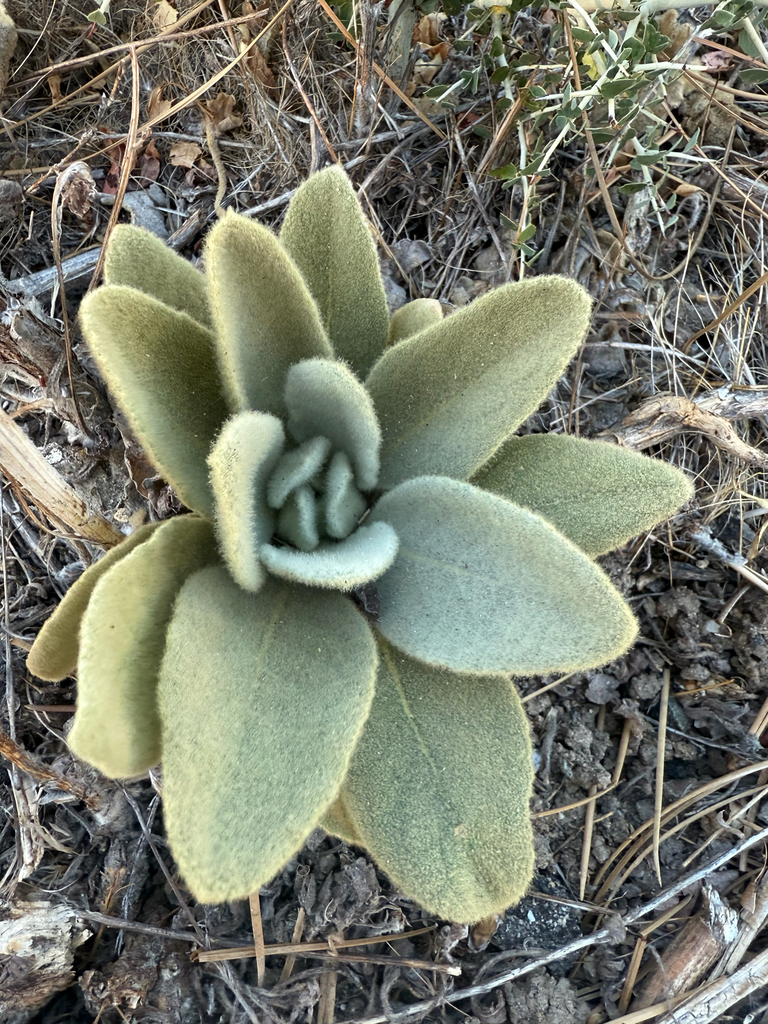
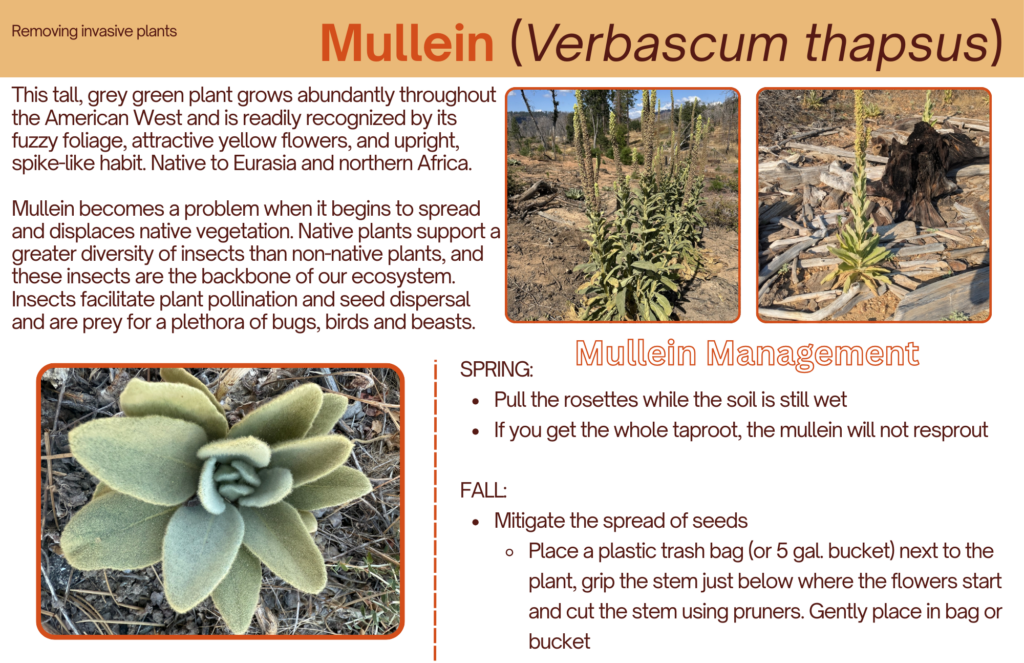
Mullein, like many weeds, is controlled best through persistence and elbow grease. Your number one priority will be to keep the plant from developing and spreading seeds: one plant can develop thousands of seeds smaller than a grain of rice. The easiest way to prevent this is to pull the little rosettes in the spring while the soil is still wet. If you get the whole taproot, the plant will not resprout and your work for the year will be done.
That’s all fine and dandy, but it’s September and I’d be surprised if you have young mullein in your yard. Odds are they’re big, turning brown, and already full of seeds. Don’t worry though, with weeds there is always hope! Our goal is now to mitigate the spread of more seeds. What we’ll do is place a plastic trash bag or 5-gallon bucket next to our plant, grip the stem just below where the flowers start, cut the stem below your hand using hand pruners, and gently place the inflorescence (a general botanical term for a flowering structure) into the bag or bucket.
I would like to reiterate that mullein is promoted through soil disturbance and spread through mud tracking on tires and treads. The best way to control weeds is to discourage their spread. Be mindful of how you interact with the landscape!
For more information check out the California Invasive Plant Council’s mullein profile.
Wanna learn more? Check out our Resource Toolkit for Landscape-Scale Management in Western Nevada County!