
Our waterways are relied upon to support our California communities in a myriad of ways including supporting wildlife, providing drinking water, agricultural production, and supporting industry. California leans so heavily on its water resources and water infrastructure that massive and complex issues are arising such as warming waters and more sporadic drought and storm cycles due to climate change. These issues continue to compound as time passes. Our latest projects look to address these issues through education and the sharing of information across our watersheds. We are preparing to release two exciting outdoor education resources as a result of our work on an EPA Environmental Education grant over the course of the last two years.
The Education Program has created a beautiful Field Sites Database where teachers and other educators can bring students to study environmental science, receive nature therapy, or just go on an adventure. The database contains maps, photos, and detailed descriptions that gives educators the information they need to pull together field trips to specific outdoor locations. The goal of the database is to make outdoor sites more accessible to teachers and in doing so to their students in an effort to promote outdoor learning of all kinds.
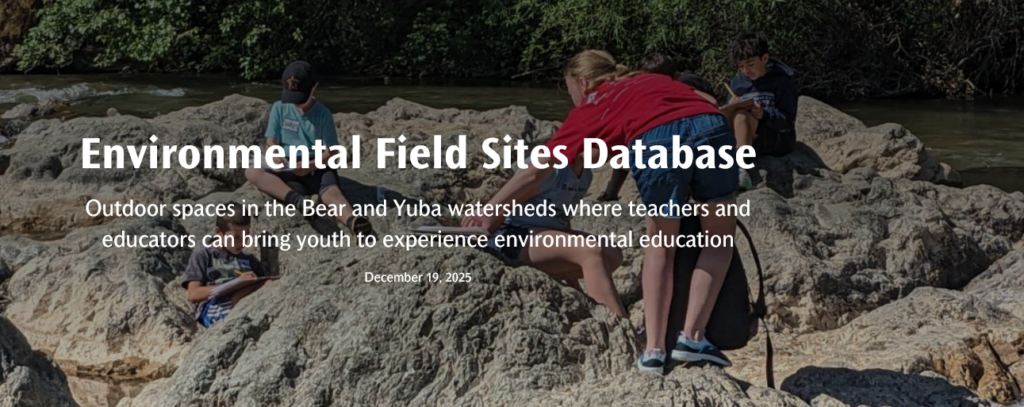
Opening Page of the Database
As they say, safety first when it comes to our schools. The database provides logistical information on hazards that exist on the site, where and how much parking exists, and if there are bathrooms and potable water onsite. The database describes the environment and phenomena that exist on the site which allows teachers to determine what best aligns with their current curricula. And the database lets you know who manages the property and what organizations might be actively working with students at the site.
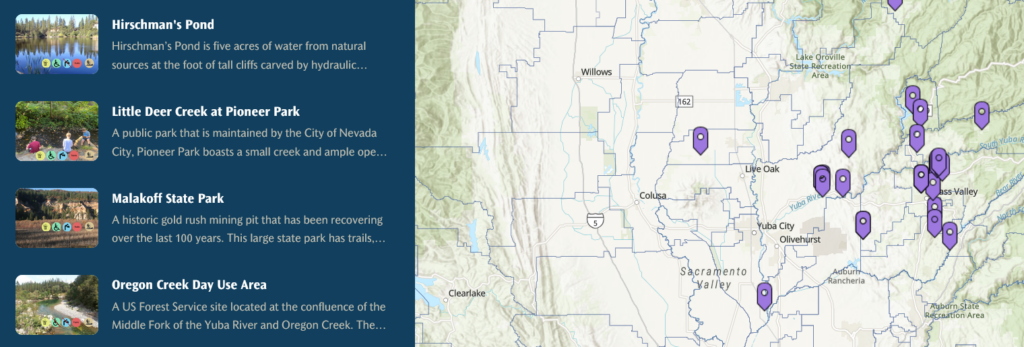
Map of field sites with short descriptions
The companion resource for the database is what we are calling the Watershed Communication Toolkit or the WCT. This Toolkit is a set of lessons and materials that prepare students to share their experiences on outdoor field trips. Students reflect on their time in their outdoor learning environment and record those experiences through writing and art work. They then prepare to share their experiences based on student and teacher preferences for sharing. It may be a power point presentation, poster, a letter…etc. Eight teachers piloted the program this fall. Many used power point presentations but some wrote letters and some even met in person for an exchange outdoors!
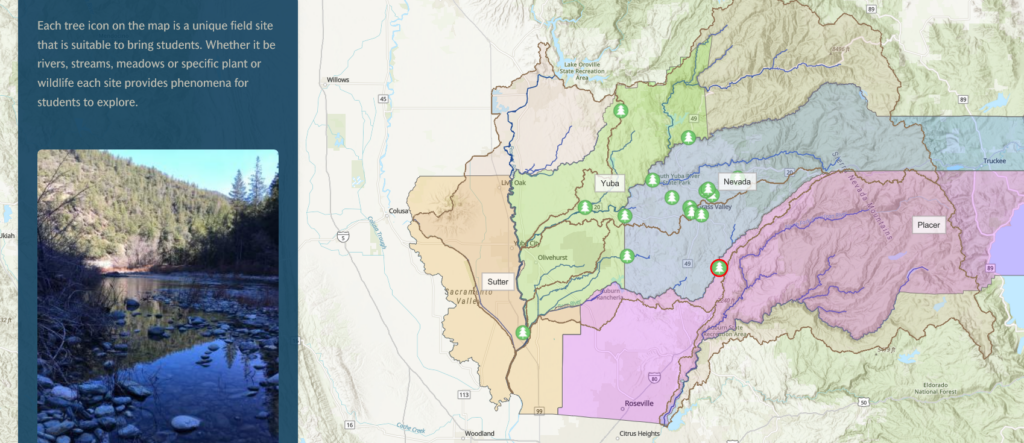
Map of local watersheds and counties
Without a coordinated understanding of the issues across our watersheds and a connection between the people across our watersheds we will continue to fall short in recognizing and addressing the key issues that those watersheds are facing. The goal of the Toolkit is to encourage students from across the Yuba Watershed to communicate with each other about our shared natural resources. And for that matter to encourage students in any watershed to share their experiences.
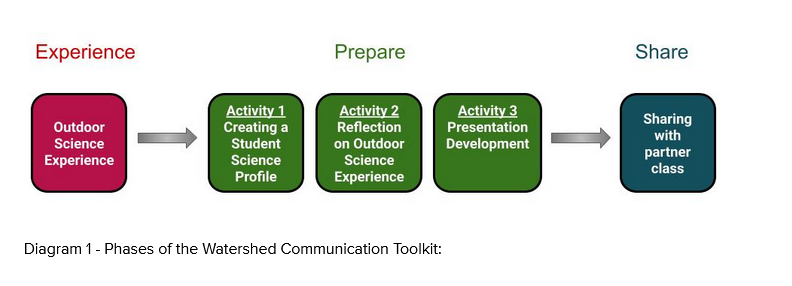
Watershed Communication Toolkit Overview
We are excited to make these resources available and encourage you to check them out, even if you are not an educator. Keep an eye out for the release of these resources soon! Please share them widely!