
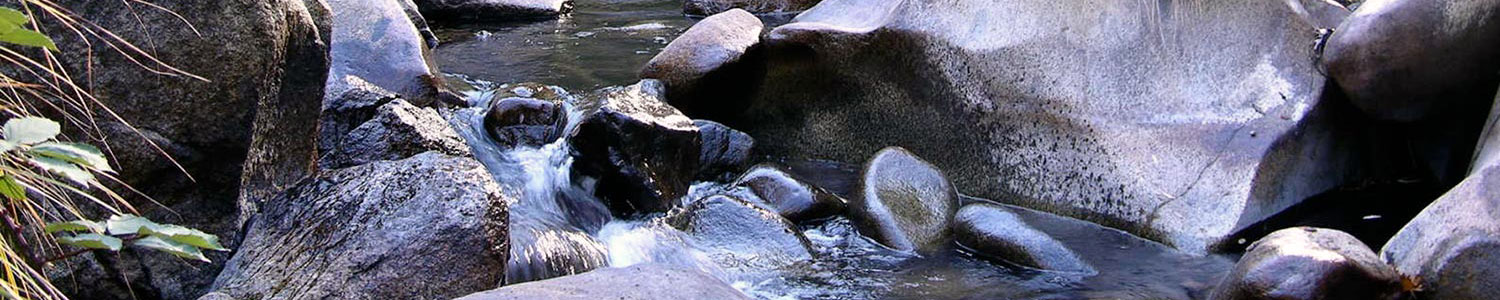
At this time of year, we love to look both back and forward, reflecting on highlights and accomplishments in 2025, and setting our sites on what we’ll be working on in 2026. Some of last year’s achievements in the Restoration Program include our ongoing post-dam removal restoration work on Dry Creek, within Beale Air Force Base (BAFB), where we’ve been working in partnership with the base since 2022. Dry Creek is a tributary to the Bear River, which flows into the Feather River, and then the Sacramento River, to the Delta, Bay, and finally ocean.
Last year we planted 580 new native plants on the site, as well as continued addressing invasive weeds by intensive hand pulling and weed whacking. These actions improve habitat for terrestrial wildlife and special status species including Chinook salmon that make the lengthy journey from the ocean to access their spawning grounds in Dry Creek.
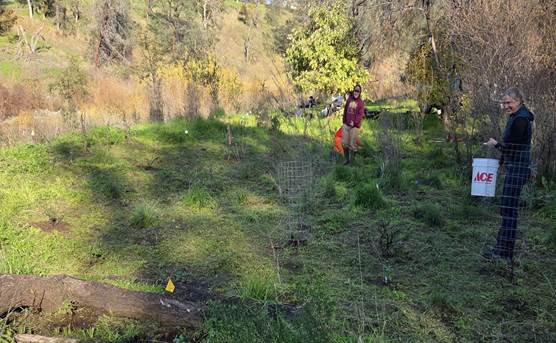
Restoration Technician Kale Riley, Lead Restoration Technician Alex Lerch, and Restoration Ecologist Monica Nova planting.
In 2025, SSI also monitored over ½ mile of Dry Creek around the former dam area,
including collecting (BMIs) benthic macroinvertebrates, measuring water quality, monitoring vegetation, conducting physical habitat surveys, wildlife camera trapping, and through fish surveys.
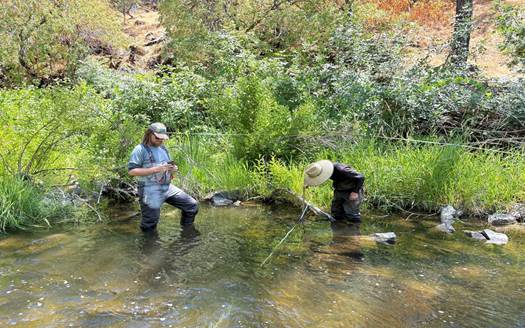
Forest Ecologist Christian Noak and Lead Restoration Technician Alex Lerch conducting Physical Habitat surveys on Dry Creek.
In 2025 we constructed an ADA-compliant Nature Trail along Dry Creek, which includes interpretive signage, traverses blue oak woodland, and connects to the floodplain restoration site, connecting the base community to the creek and its watershed.
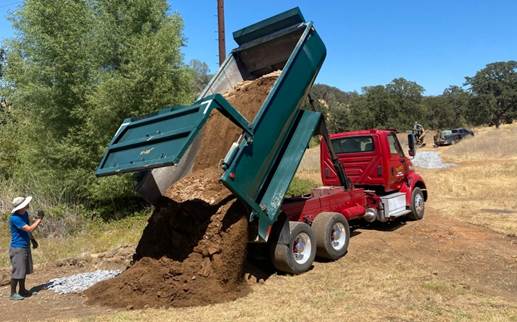
Trail building contractor Keith Monohan receiving trail material delivery.
At the end of 2025, Chinook salmon were documented in Dry Creek in fish surveys, and beaver moved into the restoration site and made 2 dams where a 15-foot manmade dam stood from 1943 to 2020. Beaver dams slow water flow, promoting the growth of new vegetation that supports a wide range of species, including fish, amphibians, birds, insects, and mammals. This type of habitat modification enhances biodiversity and improves water quality.
Looking ahead to 2026, SSI will be branching out to other parts of Dry Creek, including upstream of the former dam site, in the Spenceville Wildlife Area, where we’ll undertake our spawning bed enhancement work. For this project, up to 2,000 tons of specifically sized gravel will be imported to the creek to increase and enhance suitable habitat for migrating fish, such as salmon, to lay their eggs.
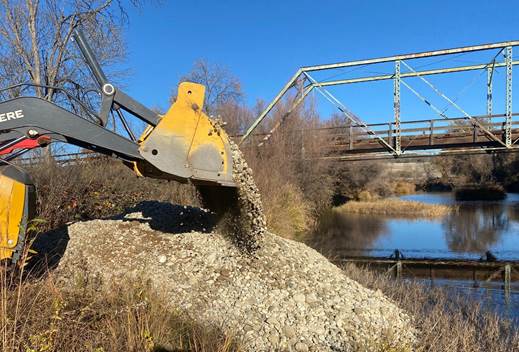
Salmon spawning gravel imported into the Waldo Junction location on Dry Creek in 2023, within the Spenceville Wildlife Area.
In 2026, we’re also expanding our monitoring efforts to these new areas of Dry Creek in order to understand the impact and efficacy of our spawning gravel work. We’ve already initiated pre-gravel augmentation monitoring, which will serve as a reference for assessing the impact of gravel augmentation on substrate size and composition, fish habitat, and biological presence and utilization of imported salmon spawning gravel. To do this, SSI will employ BMI field picks, collect samples for eDNA analysis, characterize substrate (the stream bottom composition), and utilize drone imagery to track change over the duration of the 3-year project.
We have some exciting things to look forward to this year—we’ll keep you posted!

Awesome news about Salmon beaver!!! Glad to here the project is still going on!!