
The Summer Solstice is an astronomical event during which the Sun reaches its maximum Northern exposure in the Northern hemisphere (i.e. this is the farthest North the sun gets all year!). The Solstice typically happens on June 20th or 21st every year, and has been celebrated for centuries by cultures all over the world due to it signifying the longest day of the year, a shift in agricultural output, and the peak of “Midsummer”.
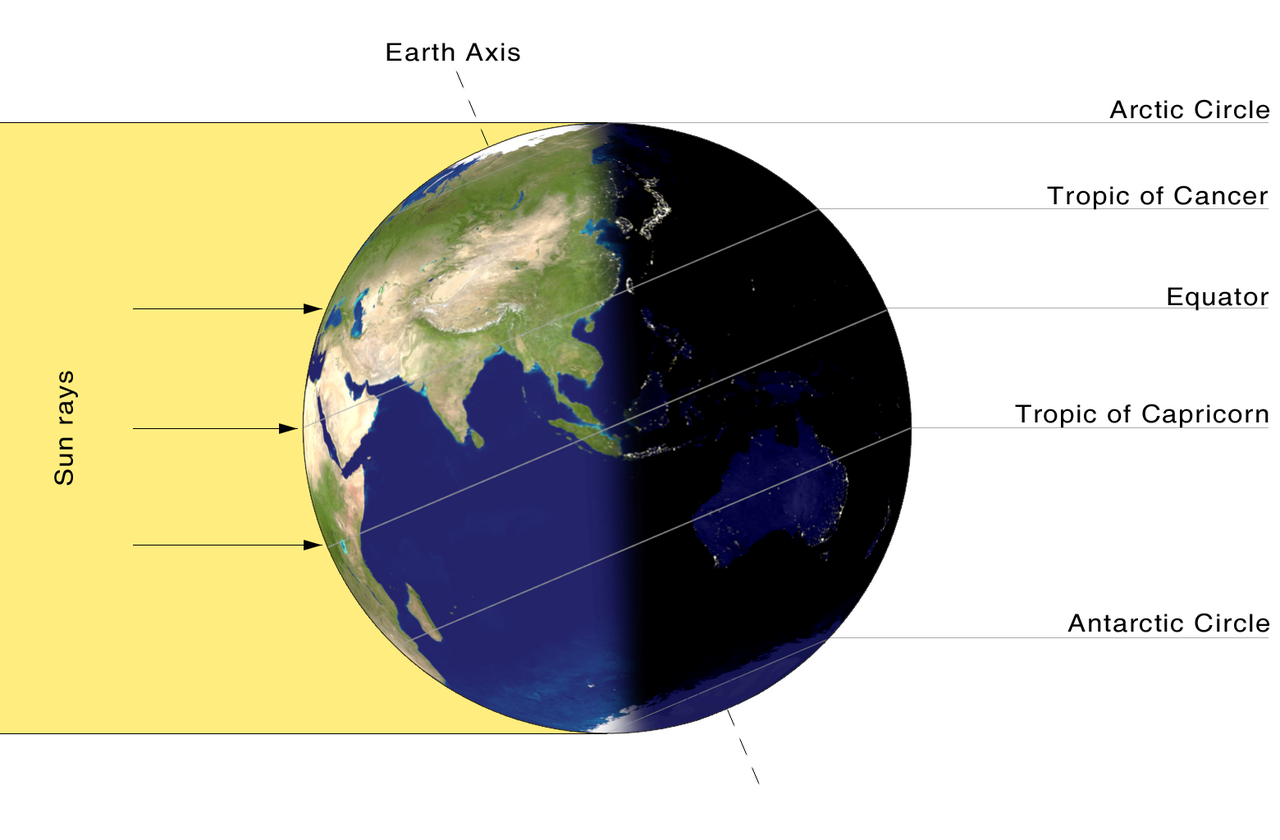
Depiction of the Earth’s tile relative to the Sun durign the Summer Solstice, showing peak solar intensity on the Tropic of Cancer, and the furthest Northern sunlight of the year. By Image by Przemyslaw “Blueshade” Idzkiewicz https://commons.wikimedia.org/w/index.php?curid=113487
This event is so significant many historical monuments are built to embrace it, including the famous Stonehenge, which is built in a way that highlights sunrise on the Solstice.
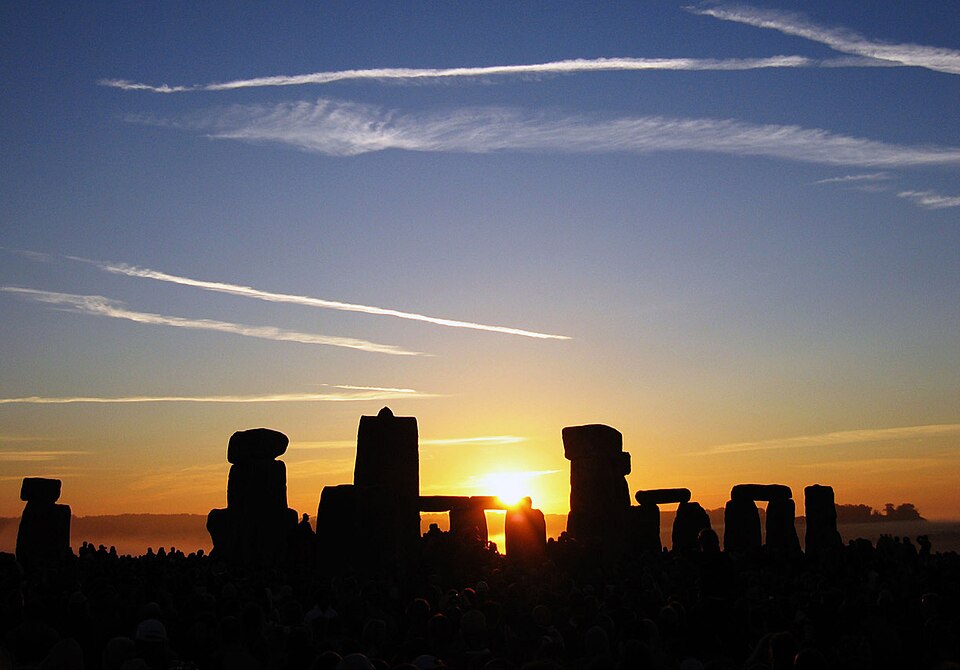
Stonehenge during a Solstice sunrise. Photo credit Andrew Dunn, 2005, Creative Commons
So why is the event so significant? Beyond simple changes in our human perception of seasonality, the Solstice also represents a significant shift in plant growth in response to seasons. With this event in the rear view mirror by just a few days, we wanted to think a moment about the implications of the seasons for our local watersheds, and how plants “know” the seasons have changed.
Photosynthesis, Photoperiod, and Light-based “clocks”
We all know that plants use a process called photosynthesis; they take in carbon dioxide through openings in the leaf surface, and use sunlight in light-sensitive structures called chloroplasts (filled with the green chlorophyll that gives green plants their color) to break down this carbon dioxide into sugar (the building block of plant structures) and water. But how does photosynthesis shift relative to day length?
The term “photoperiod” refers to how much light a given location is receiving in a day. Early in the history of modern plant sciences, researchers were curious: “we know plants follow the seasons, and plant structures cost lots of energy to make, and seasons shift, so how do plants ‘sense’ when to grow long shoots, big leaves, and flower for maximum reproduction”? The answer, it turns out, is a mix of chemical receptors within plants called Phytochromes (“phyto” meaning plant, and “chrome” meaning color). These are photo (light)-sensitive proteins that shift or “activate” and convert from one form to another when exposed to light.
It is currently believed there are three primary types of Phytochromes, simply labeled Phytochrome A, B, and C. While each of these proteins has very different responses and impacts at different life stages (e.g. Phytochrome A is common in early growth or mixed-light plants, while Phytochrome B is common in more ligh-grown plants), their general purpose and chemistry are mostly similar. These proteins start in their “inactive” form, often abbreviated P(r), meaning they are Phytochromes (P), reactive to red (r) light. When exposed to daylight, which is rich in the red wavelength, these proteins are activated and shift to a form called P (fr), meaning they are now reactive to far-red light (the predominant wavelength in dusk and evening light…see where we’re going with this?). Essentially, light detection in a plant is like a big light-sensitive battery; as light hits the leaf, phytochromes rapidly shift forms until light decreases, and then they slowly shift back to their base form (depending on the type of Phytochrome, a detail we won’t go too deep into here). The ratio of active and inactive Phytochromes then serves as a “clock”—as the amount of P(fr) is high, that means the plant is receiving more light than dark, and behaves as though it is in the long growing season, while this ratio decreases as the day length shortens later in the season.
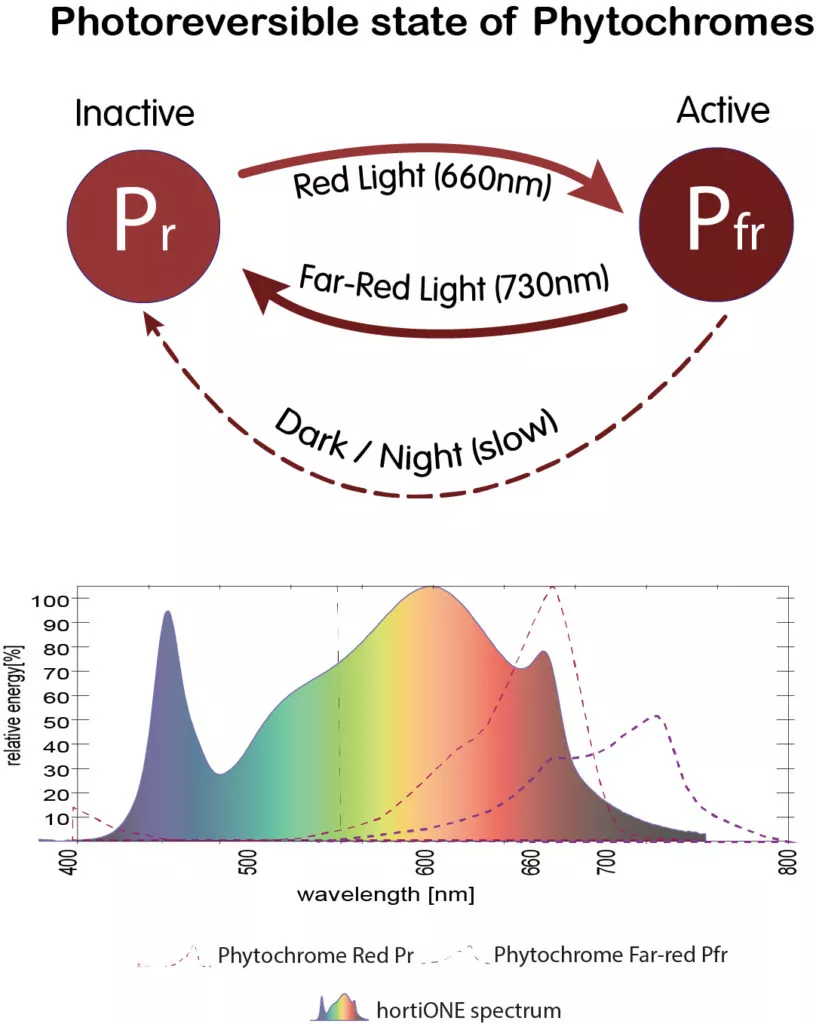
The electromagnetic spectrum of light and phytochrome response. Image credit hortiONE.
The next step in this process is the plants then “using” these clocks to determine growth. Multiple studies have shown that particular genes “express” (turn on or are activated) more during long photoperiods, when P(fr) is high. These genes have been shown to be associated with things like germination, leaf growth, growth of tubers, flowering, and shoot growth. Meanwhile, as the ratio shifts back toward P(r), meaning lower light, genes activate signifying senescence and “time to end the season”, which in some plants is also an indicator to “hurry up and make flowers/set seed!” if they haven’t already.
Experiments in Day Length: How Know What we Know
So how do we “know” about phytochromes? Many modern experiments in biology involve a process of matching “wild type” and genetically modified organisms whereby certain genes are “knocked out”, or are mutants relative to one particular gene of interest. In the case of phytochromes, wild type and “knockout” plants all perform differently when grown in the same light environment, and shift their behaviors differently relative to different light environments.
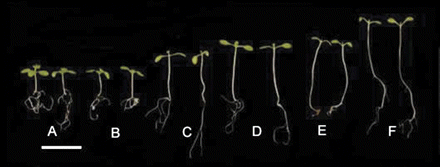
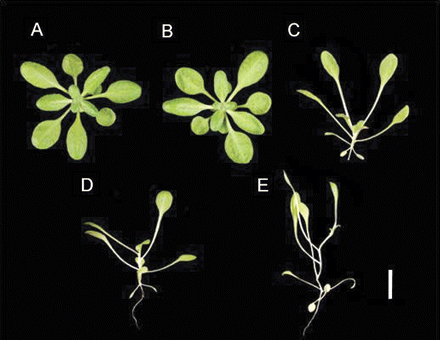
“Wild type” (A) and mutants of Arabadopsis with different phytochrome gene variants (B-E) grown in the same light environment demonstrating how phytochrome response to light changes growth forms. Photos reproduced from Franklin and Quail (2010), Phytochrome functions in Arabidopsis development.
Finally, remember…everyone can be a scientist! Farmers and agriculturalists have long utilized the science of photoperiod control for modifying crops. For example, cannabis growers often lean into the practice of “light deprivation”, tricking plants into “thinking” it is fall, thereby rapidly increasing flowering.
So are you’re out there enjoying peak summer, thinking about how the longest day of the year is just a few days behind us, take a look at the plants around you and how much light they are getting all day versus certain times of day versus earlier or later in the season, and see if you can spot how much a change in Photoperiod is shifting their growth. Then…realize that those plants are utilizing their very own biological clock: Phytochromes!