
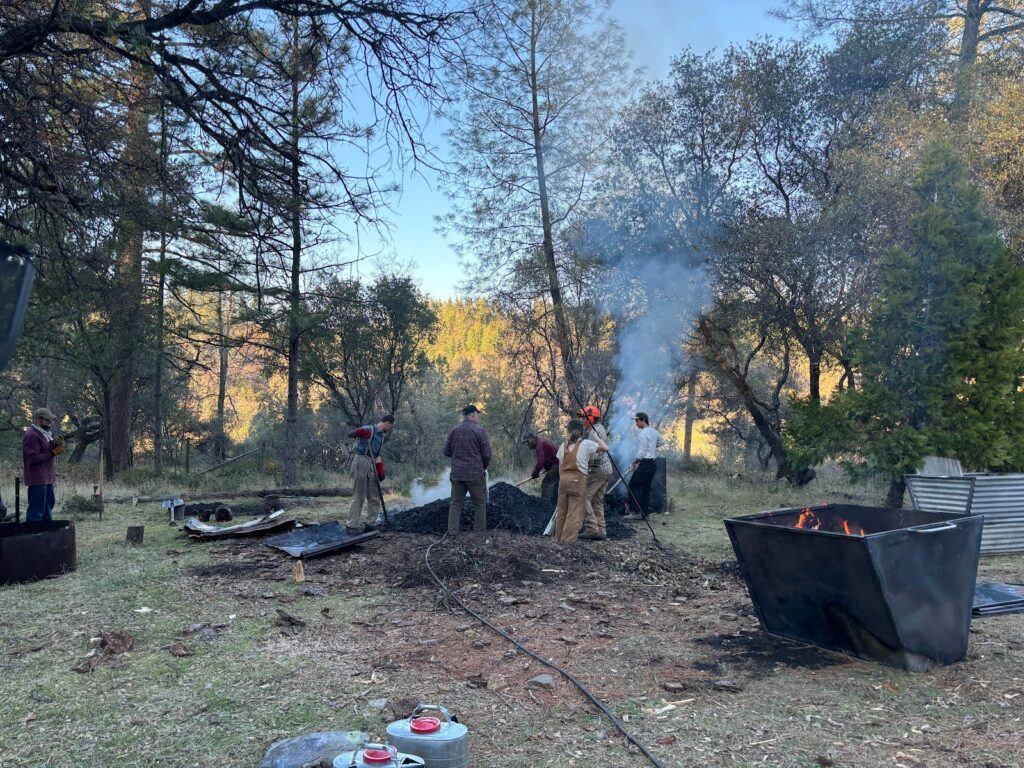
At Nevada City School of the Arts (NCSA) on Saturday, December 13th, the Biochar Coalition led a Biochar demonstration burn day with support from CHIRP, Sierra Institute, NCSA, and Sierra Streams Institute. Members from the Biochar Coalition traveled locally and as far as Napa and Yreka, CA to test out 8 different models of Biokilns with the goals to reduce local woody fuels, create quality Biochar for the NCSA’s newly planned school garden, educate the public, and spend a lovely day safely burning in the woods!
We decided to do what we do best to support the doers and biochar experts by collecting data to help answer some common questions surrounding this currently in-vogue land stewardship strategy. While there are plenty of papers out there regarding the manufacturing of char and other wood by-products in very controlled laboratory environments, it is difficult to find data-backed science regarding mobile biokiln units burning different kinds of woody fuels in the rugged outdoor environment. This is largely because this is still a hot new branch of the industry, and because there are so many variables difficult to replicate in the field (as experienced in our somewhat improvised experiment).
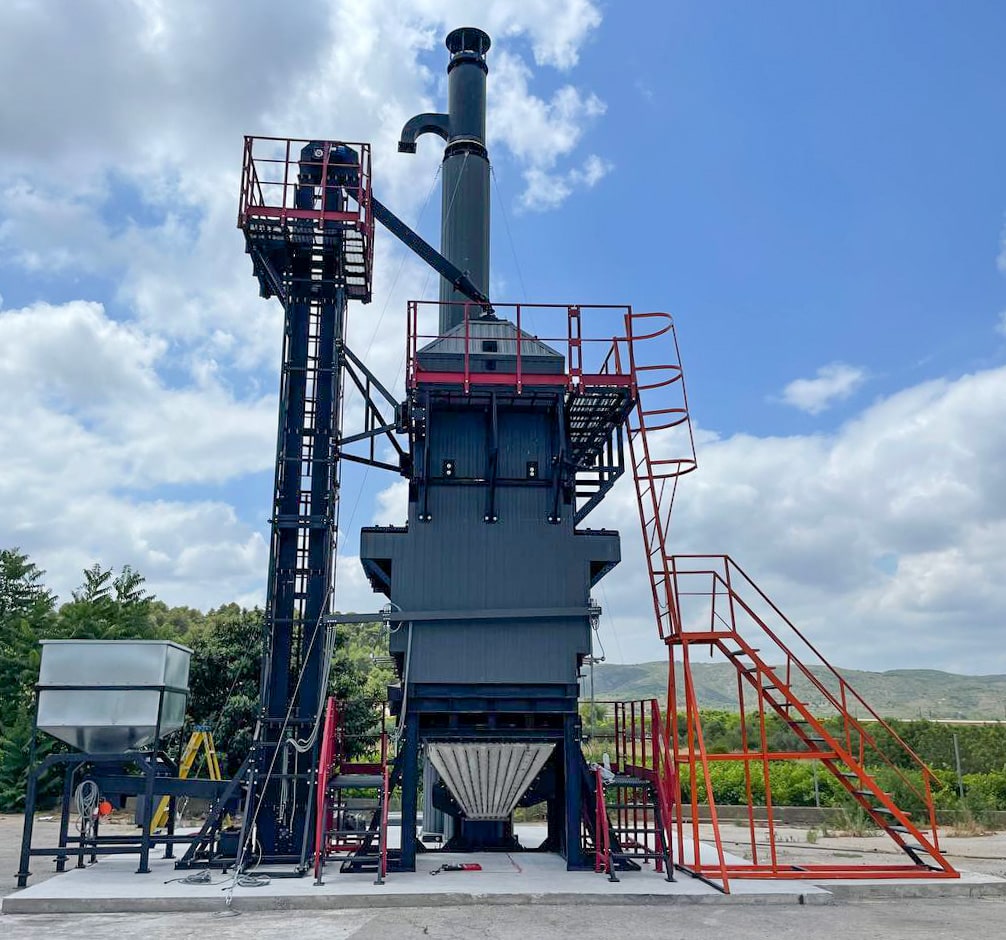
Many of the questions biochar experts would like answered revolved around “how hot are our fires actually burning?” This is a very important question since creating Biochar requires very specific temperatures during combustion of organic material in the absence of oxygen, a process called pyrolysis. In a more controlled environment (like Greenpower’s BIO-KILN unit shown below), pyrolysis can be accomplished at varying speeds, dependent on the temperature, each creating different end-products for alternate goals (biochar, bio-oil, syngas, etc.). Fast pyrolysis can happen as quickly as 2 seconds and occurs at higher temperatures (800-1000°F+); intermediate pyrolysis occurs at 600-800°F; and slow pyrolysis can take hours to days to complete at temperatures below 600°F. Slow pyrolysis has the highest quality and yield for char production (Sathyabama et al. 2025) and is therefore the goal for most biochar practitioners.
With this question in mind, we brought thermocouples and designed an improvised experiment to determine the temperatures at which two of these biokilns were burning, including one completely new design out of Seattle, WA, the Flamewise. The running hypothesis by Tabor Teachout, Biochar Coalition President, was that the temperatures would generally stay below 600°F. The more data we can obtain from burns like these, the better we can understand the process of combustion and improve techniques, equipment, and viability.
To prevent the reader’s confusion, I’ve omitted our less accurate results, due to various factors, and only showed one unit, but you can expect much more data and analysis incoming from local biochar burns, burn piles, broadcast burns, and more!
Mini Ring of Fire
Ignitions ~12:40 PM
Scotch Broom added ~2:29 PM
Dousing ~4:13 PM
HOBO#1 @ soil level in center

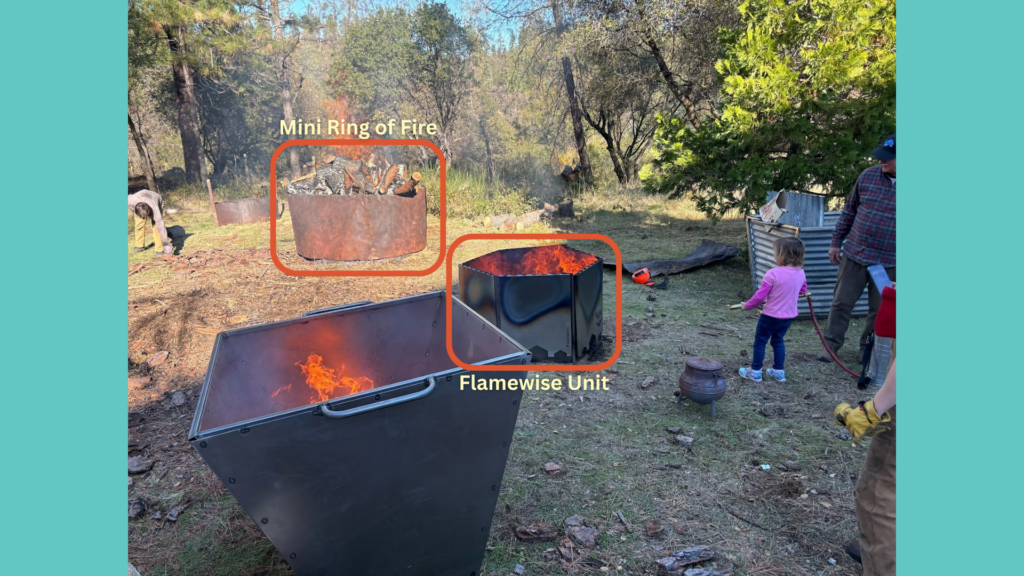
The chart above shows temperature over time for the Mini Ring of Fire (a small construction of the popular Ring of Fire biochar unit); see photos below. The red line shows the temperature of the datalogging “HOBO” unit buried under the soil in a PVC case (approx. 5 inches). The blue line shows the thermocouple temperature at soil level in the center of the kiln, below burning material. The following represents a summary of the data collected at HOBO #1:
Max Temp: 888.5°F @ 12:45 PM
Avg. Temp: 475.2°F
First time above 100°F: 12:37 PM
Time above 600°F: 8mins, 3 mins, 22 mins, 5 mins, 5 mins (44 mins total)
Data Logger starting Temp: 54.55°F
Data Logger Max Temp: 79.23°F (under soil in PVC case)
Takeaways:
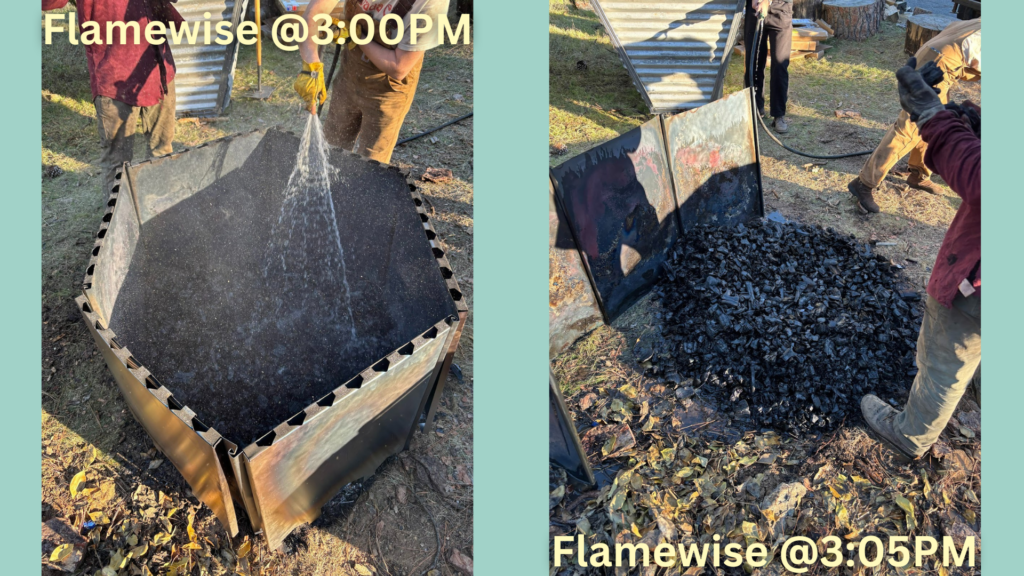
Comparing this to readings on the other unit measured this day, the new Flamewise biokiln, temperatures didn’t get nearly as hot or stay hot for as long. This means there was potentially less air access to the bottom of the unit, which limited combustion to lower levels of pyrolysis. Besides the initial spike from getting the wood ignited and burning, and a spike again at 2:39 PM, the thermocouples only read above 600°F for 44 mins as compared to 2 hours and 20 minutes with other measured units. Temperatures read at levels from 275-600°F for nearly 3 hours. This likely means that the biochar produced with this unit was of higher quality (Tripathi et al. 2016), but it is unclear at this time if these differences in temperatures were due to unit design, fuel type (presumably the same), timing, operator, or other conditions.
It is most likely that the spike in temperature around 2:30 PM is from when Scotch Broom and Blackberry were added to remove them from the surrounding area. I didn’t think it would affect the temperature at the soil level this much or for that long. Perhaps more mixing was done or other unknown events further increased this temperature reading at this time. We’ll make sure to be more deliberate regarding mixing material in at set intervals in future studies.

This was the first time anyone present had measured biochar temperatures using thermocouples, so it really only provoked more questions and made us come up with better experiment designs to capture more accurate data in the future. This is an important step in conducting experiments like these because sharing experiences and trying experiments together with our community is the best way to learn!
During the event, there were other questions pondering how hot the ground got underneath the Biokiln to limit the negative effects of sterilizing the soil with heat. Studies have looked at the effects of burning masticated fuels in California, for example, and have found that at a soil depth of 10cm, sustained heat at 140°F is a lethal amount to negatively affect soils. Luckily, this only happens during extreme fire events with masticated material over 3+ inches deep and low moisture levels (Busse et al. 2005). Our dataloggers were about 10cm below the soil and never got to very high temperatures, but these were located to the side of the biokilns. More experiments will be necessary to be sure that burning with these biokilns doesn’t allow the temperatures to get to high/lethal levels for the soil biome.
Stay tuned for more information to come! Please reach out in the comments with more questions or ideas. If you’d like to see more data from this experiment, please reach out to Christian Noack at christian@sierrastreamsinstitute.org.

One thought on “Studying Biochar Temperatures”
Comments are closed.