
Field Season Recap!
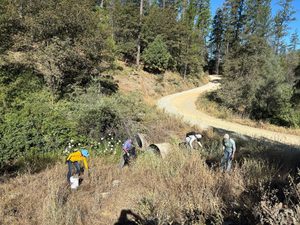
Now that we head into fall, it’s a perfect time to reflect on our 2026 monitoring field season here ...

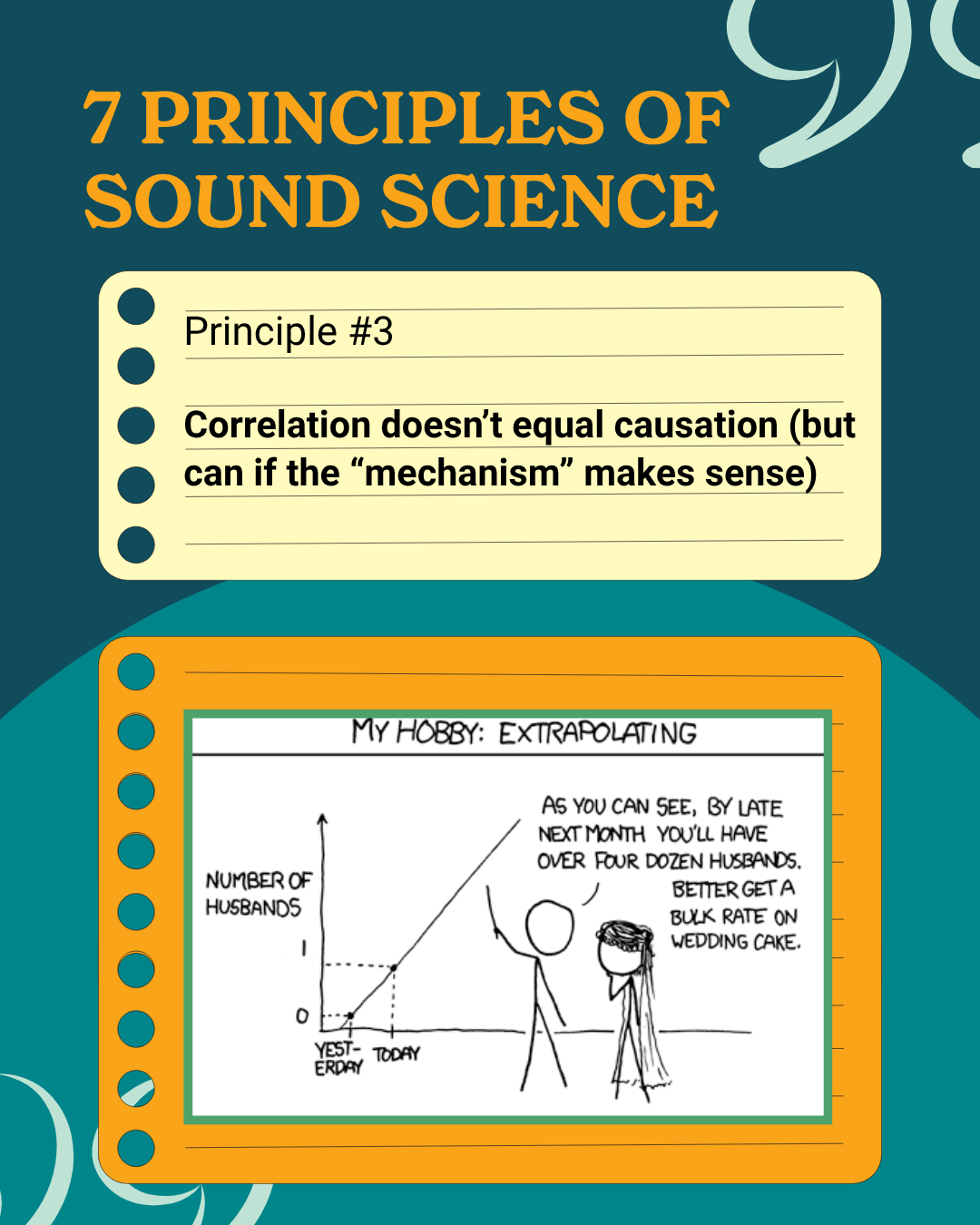
It’s been a little while since we touched base on our journey through the principles of sound science, but we’re back! Today’s topic is one near and dear to me, and is based on a phrase most people have likely heard used, or even misused; “Correlation does not equal causation”.
This morning I put on black socks. Then my car wouldn’t start. This has happened twice before; both times my car didn’t start I was also wearing black socks, and when it did start I wasn’t wearing black socks. Therefore, when I wear black socks, my car won’t start.
This is a rather extreme example, but serves to illustrate the slippery slope of correlation and causation. We could even have a plethora of data showing a pattern between these two seemingly unrelated phenomena, and if we’re not careful, we could determine that there is a “significant” (the quotes here are important, as we’ll discuss the weight of that particular word more below) relationship, perhaps even “causal”. Here, there is no mechanism (at least not one that has an extensive shared history of past evidence) by which sock color and engine starting make sense. How would sock color influence the engine? Does the brake pedal detect my sock color, and somehow the engine receives that information?
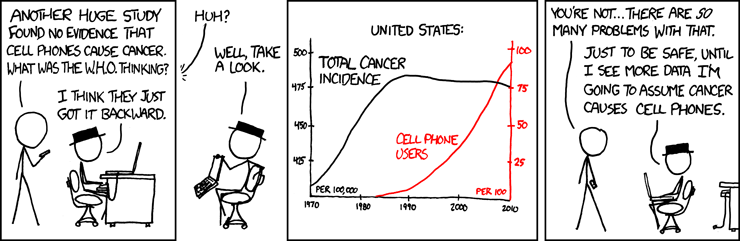
But what if there was a mechanism? What if I didn’t realize that every morning that I put on black socks happens to be coincidentally tied to when my battery needs to be replaced? That would be the mechanism, and it would be entirely unrelated to my observation.
This is important when considering things like climate science. While the field is highly nuanced and recent and current studies continue to explore how things like cloud cover, permafrost, and even contrails influence climate “forcing” (the degree of influence of particular variables on our climate) and model accuracy, the basic “first principles” involved in climate science are simple: there is a high level of evidence (in fact arguably some scientific “laws” at play) that molecules of carbon dioxide (and many others!) in our atmosphere increase warming due to relationships between incoming and outgoing radiation. This is basic physical principle. The second “first principle” is that humans pump out carbon dioxide (and these other molecules!).
This discussion is also particularly important in the realms of medical science, and things like vaccine side effects. I am not a vaccine expert, and will defer to those who are and the extensive scientific literature in this field for details, but when I hear community members link things like certain vaccines and autism, my first question always comes back to “I don’t know enough about this, but I’m not sure that quite makes sense; what is the proposed mechanism?”. In many cases with vaccines, we have quite a bit of data on known or potential side effects, often based on the research in that field related to biological mechanisms. For example, we “know” (have evidence for) a particular substance or carrier fluid impacting a particular biological process, and we “know” that process may be linked to this other process, therefore here are the myriad potential side effects we advise patients on. This doesn’t mean that “well I received this medication and then I had this negative effect” isn’t valid, and that your experience isn’t real. In fact, this doesn’t mean that the two aren’t related; but we have to be careful to examine all potential causes, which is difficult to do with just one or few outlier cases, and to examine them through the lens of mechanism and causality (“if x then y because x influences y”, not simply because they occurred after each other).
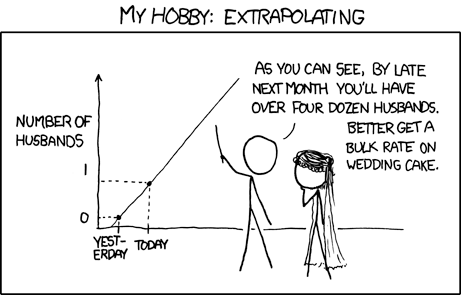
Some of you intrepid readers may read this and think “but what if the prior mechanism wasn’t previously known, published, shared, or isn’t even fully understood, and there could be a relationship?”(with respect to the sock and car problem), or that a mechanism may have been ignored (for the climate or vaccine problem). This is a great question! This would then represent the limits of the current science in that field, or an active area of research, where data and statistical relationships are used to explore potential causal relationships beyond anecdotal evidence. In fact this is exactly the case with climate and vaccine science. In climate science, the majority of research out there is split between examining model accuracy and modifying projections versus testing all of these other potential contributing factors. While in vaccine science, there is extensive research always going on the realm of unexplored causal relationships and which biological responses influence others in cascading side effects—these are experts, and they’ve asked many of the same questions you may have…often decades ago! In both cases, there may or may not be a scientific explanation, but positing that explanation without ways to gather and test data would not be “science”.
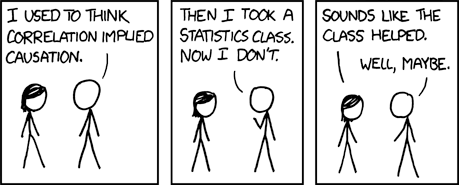
My favorite example of this phenomenon is astrology. Astrology is an ancient field of observation and is based highly in pattern recognition, but also has such a far fetched (though admittedly not impossible) mechanism, that it sits firmly in the realm of “pseudoscience”. Perhaps millenia of observations show that people born when the stars are in a certain position relative to each other seem to point to patterns; this is step one of science…making an observation of a pattern and noticing the pattern may be consistent. What is missing is the mechanism; could it be that somehow minute gravitational forces among astronomical bodies influences something in human physiology and thus psychology? Perhaps. Do we have evidence of that impact in a way to truly test relationships? Not really. Perhaps the pattern is real but the mechanism is something else entirely—a coincidental (or not?) relationship between seasonality in hormones relative to climate (I’m reaching here as a non-expert in astrology), or a self-fulfilling prophecy when we expect an outcome, or something else entirely? These questions are what leave astrology in the realm of pseudoscience. But an important distinction here is that that is okay. We are simply saying it is not science. It is always important to remember that different ways of viewing the world are valid; the goal of this discussion is simply to define what science IS and IS NOT.
What science IS and IS NOT, one again, comes back to data and uncertainty. In science, we can only definitely speak so something we have data to support. If we have limited data, perhaps we have a hypothesis we can test with more data, and now we can consider how that hypothesis is backed by a potential causal mechanism; does it make sense that thing A would lead to thing B. Why or why not? If we’re not asking that question and just assuming a connection, that doesn’t mean it’s not true, as perhaps we just haven’t discovered that connection yet. But what it does mean is that if we are to explore that question through the lens of science, we need to ensure we follow first principles, and embrace mechanism, because remember; Correlation does not equal causation.









Laurie says:
Unfortunately for this discussion there are now several good scientific studies comparing vaccinated vs unvaccinated children and the results do not look good for the vaccinated population despite many factors accounted for and biases adjusted for in the study by the prestigious Henry Ford Institute in the two different groups. We’ve got to stop saying “We have no proof” but instead, “We have plenty of evidence” but maybe mainstream science, large corporate institutions, monitory incentives and fear of what might happen if we seriously were allowed to investigated all causes of a particular outcome are involved here. The government and corporate agendas may not want the same goals as environmentalists or health advocates. The same goes for Climate science and agendas.
Rick Range says:
In my conversations there is a certain segment of people who have their self image based upon “alternative medicine”. I hear convoluted justifications based upon pseudoscience that reinforces their need to confirm their idea that they know better than doctors or find phony doctors that fit their “alternative lifestyle”. The anti-vacination is 4 movement billion dollar industry. Lots of quacks out there. A big problem with this as they discourage people not to seek real science based medical treatment.