Field Season Recap!
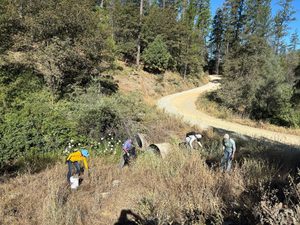
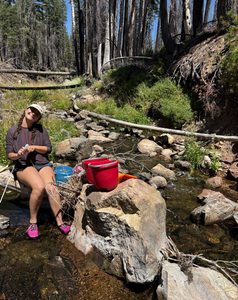
Now that we head into fall, it’s a perfect time to reflect on our 2026 monitoring field season here ...

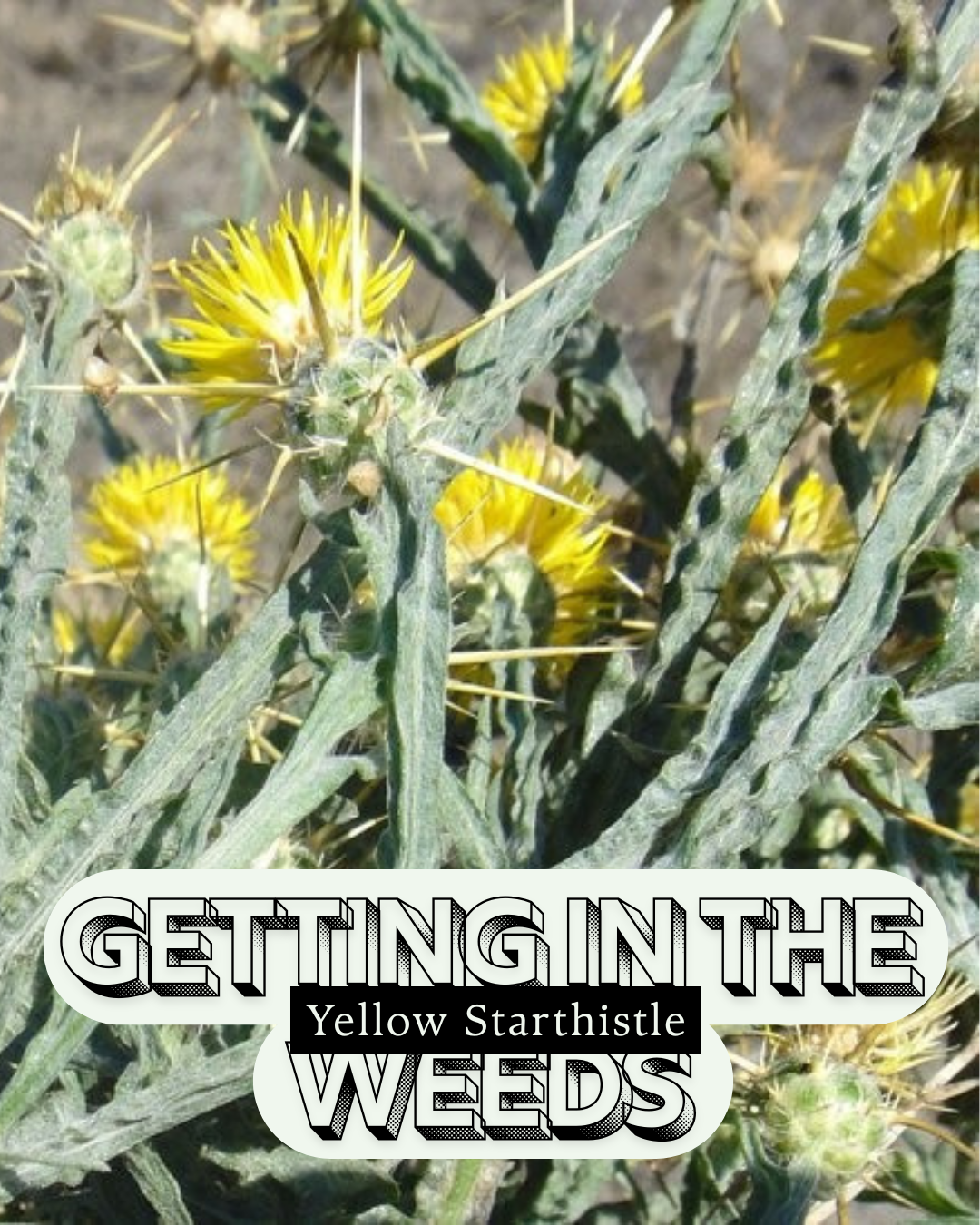
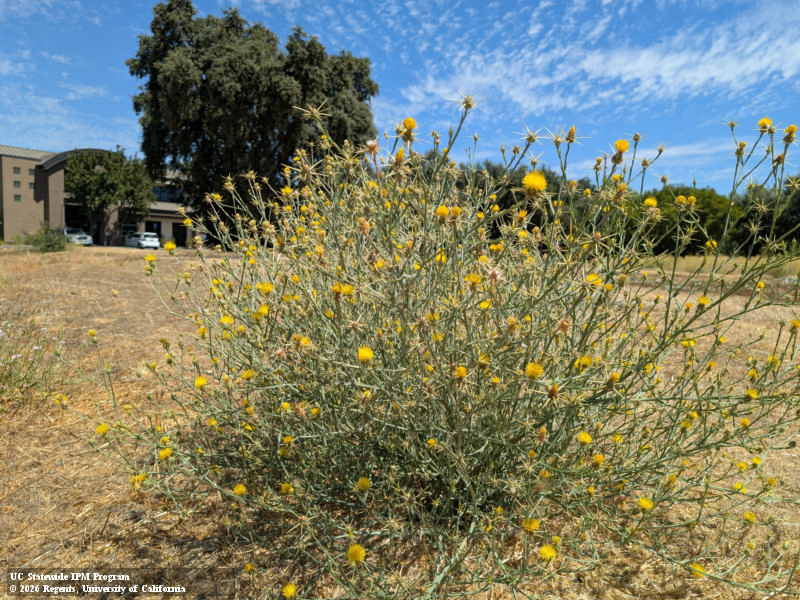
Yellow starthistle (Centaurea solstitialis) is one of the most widespread invasive plants in California, estimated to cover nearly 15% of the state. Standing anywhere from an inch or two off the ground to heights of 4 feet, topped with long, sharp spines, and a shock of yellow flowers, stands of this plant’s blue-green stems can cover acres at a time and are near ubiquitous through the Sierra Nevada foothills. An annual plant, starthistle begins to flower well into summer before releasing its seeds and drying to a crispy, spiny, and flammable mass by August or September.
Hailing from the Mediterranean, starthistle was most likely introduced to California through contaminated horse feed grown in Chile and transported north on a Spanish vessel in the last 200 years or so. Since then it has established itself as a major agricultural pest and a general ruiner-of-fun for anyone looking to enjoy California’s grasslands and oak woodlands. Thankfully, we have the knowledge and skills to tackle starthistle; with a little determination and elbow grease, we can get the plant to a manageable state on the lands we inhabit.
Before we begin, let’s review a few relevant aspects of starthistle’s biology. As mentioned above it is an annual plant, which means it completes a full life cycle each year. Seeds will germinate with the first fall rains, develop through the winter and spring, flower around June, and go to seed by August. These seeds will only blow a few feet away from the parent plant, meaning our neighbors aren’t necessarily to blame for starthistle making its way next door. Notably, these seeds may lie dormant in the soil for up to 5 years, something very important for us to remember as managers (more on that later). starthistle also consumes a fair amount of water compared to other weedy annuals (e.g. grasses) because of its deep root system, which it spends much of the fall and winter developing before bolting and going to flower in the spring and summer. It is a ruderal plant, meaning it thrives in marginal conditions and disturbed soils, such as the edge of a recently graded gravel road, heavily grazed pasture, fire breaks and dozer lines, and sites of heavy equipment usage. Finally, starthistle requires full sun, so we won’t find it growing in shady places.
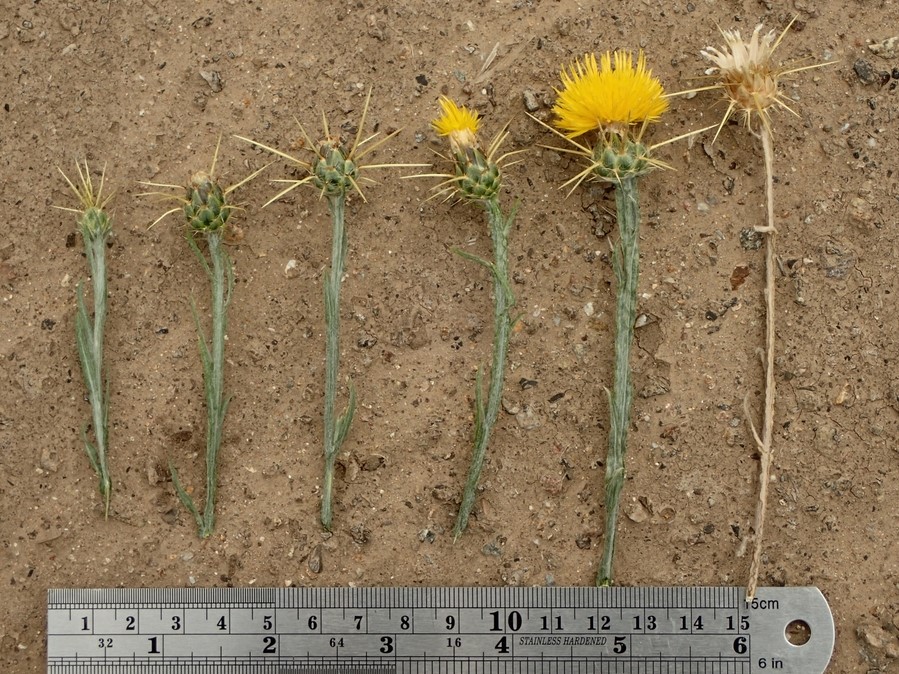
So how do we manage starthistle? We have a number of effective methods at our disposal including hand pulling, mowing, grazing, and burning. All of these methods should be executed in late spring to early summer when the plant has developed spines and is just on the cusp of flowering. If mowed, grazed, or pulled too early, the plant can use its extensive root system to resprout, and, as fun as it is, I assume most of us would like to limit our starthistle management to once a year. If removed at the right time, we stop that year’s plants from producing seed and make room for desirable plants to grow (whether growing alongside the starthistle or present in the seed bank). When mowing, ensure you mow low to the ground and cut off as much stem as possible; for this reason, it is recommended you use heavy-duty string or twine rather than metal blades. If you were unable to control starthistle and it has begun to go into seed, that’s ok! Carefully clip the plants at the base, bag the plants into heavy duty contractor bags, and dispose of the bags. Alternatively, you could burn this harvested material, but it is important to be incredibly cautious if you will be moving these seed-laden plants around your property as this could introduce the plant to uninfested places.
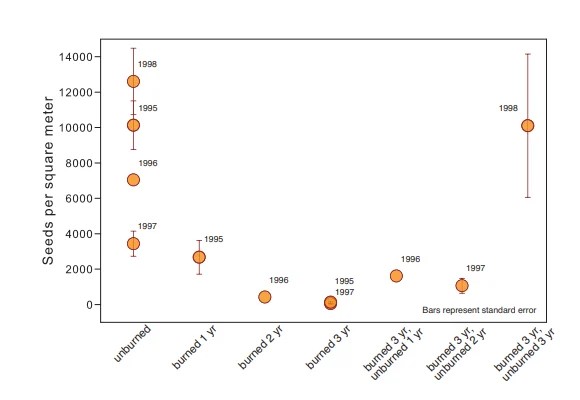
With each of these methods, it is important to follow up consistently every year and maintain good habits. If your goal is to eradicate starthistle from a site, for example, you should ensure that no plant goes to seed and that you do the job each year for 5 years, since seeds can last in the soil for about that long. Soil disturbance should be limited, as this will promote seed germination.
From DiTamoso, Kyser, and Pitcairn 2006 (1st link above)
It is also important to think about how starthistle spreads, and what we might do to stop an infestation before it has started. Since the seeds only travel a few feet from the parent plant, we can assume that patches will slowly increase in size over time. What that doesn’t tell us is how it has come to cover a significant portion of the state’s land area. That is likely the product of contaminated soil sticking to heavy equipment such as tractors, excavators, and bulldozers that carry the starthistle from job site to job site. We can also transport starthistle seeds in our shoelaces if we’ve walked through it, just as animals can carry it on their fur or feathers. Best practices to prevent the spread include rinsing equipment tires or treads of mud on site before moving onto the next job, brushing off our shoelaces before leaving the trail or going to another part of the property, and limiting soil disturbance so as not to create habitat for starthistle.
As widespread and annoying as it is, starthistle has been studied and managed extensively over the past few decades, which leaves us with a rich library of resources we can use to develop our skills and knowledge. Peruse the resources linked below and feel free to reach out to SSI with any questions!
Cal-IPC Yellow Starthistle Prevention Training Videos
Yellow Starthistle – University of California Statewide Integrated Pest Management Program
Yellow Starthistle Cal-IPC Plant Profile
Yellow Starthistle Best Management Practices (Cal-IPC/UCANR WeedCUT Decision Support Tool)