Science doesn’t make decisions or tell you how to live your life, it only provides information
It has been a while since we last discussed our 7 principles of sound science. As a reminder, we’re ...

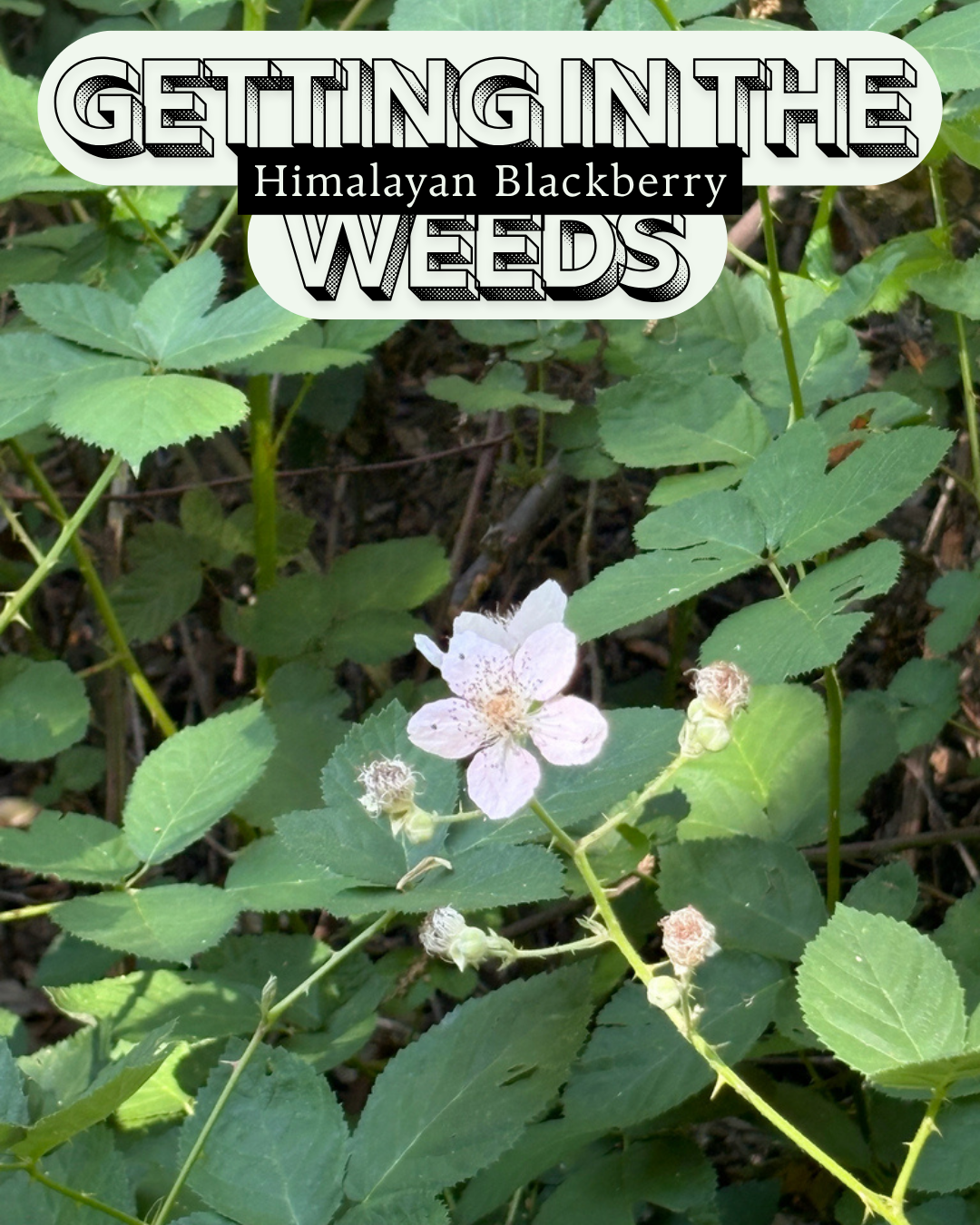
About 140 years ago, the prolific horticulturalist Luther Burbank of Santa Rosa, California received a packet of seeds in the mail from India, near the Himalayan Mountains, and was pleased to find they grew into a robust and prolifically-fruiting blackberry vine. Dubbing it the ‘Himalayan Giant’ (Burbank was ignorant to the plant’s native origin in Armenia and Iran) it sold well in his popular mail-order seed catalog. Once established in gardens across California and the Pacific Northwest, these blackberry shrubs spread voraciously and have reached a state of near-ubiquity along the streams, in the woods, and through the fields of California.
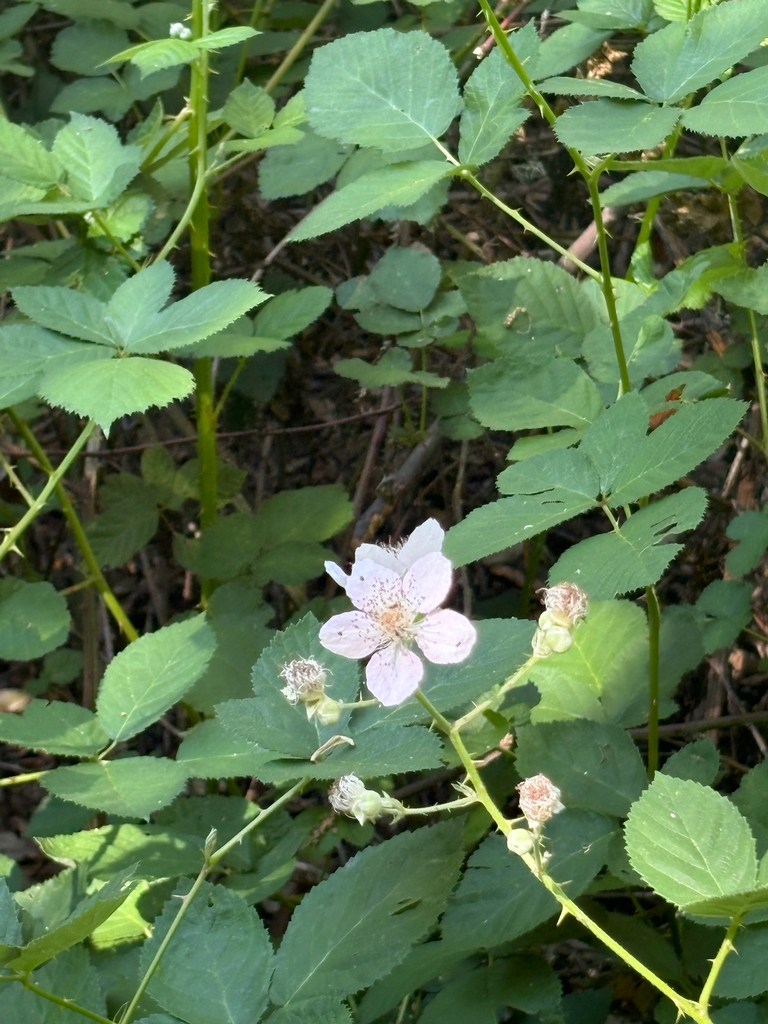
Himalayan blackberry (Rubus armensiacus) is a highly invasive, perennial, vining shrub with reddish stems, white to pink flowers, and big, mean thorns along the stems. Its fruits begin green, turn red as they plump, and mature to large, sweet black berries. For many of us, Himalayan blackberry is an ever present specter that haunts our dreams of enjoying a day unscathed along any body of water in western Nevada County. It grows very fast, spreading quickly through seed dispersal (birds like to eat the fruits) and adventitious rooting. Make sure not to confuse Himalayan blackberry with native blackberries like R. ursinus and R. leucodermis, each of which have leaflets in groups of three (Himalayan blackberry has groups of leaflets in groups of 3 to 5), whitish stems, and are generally smaller than their invasive cousin.
Unlike other invasive plants we may choose to manage, Himalayan blackberry management requires a fair bit of consideration before diving into removal; this is to say, more than any other invasive plant, Himalayan blackberry is a plant of many uses. Humans and wildlife enjoy the fruits when they’re in season; in the spring, blackberry brambles offer great habitat for nesting songbirds; and they are often growing along streams, where they are now the only plant holding the soil together after crowding out all other plants. As responsible stewards, we should always take time to consider the positive and negative impacts of any action we take on the land.
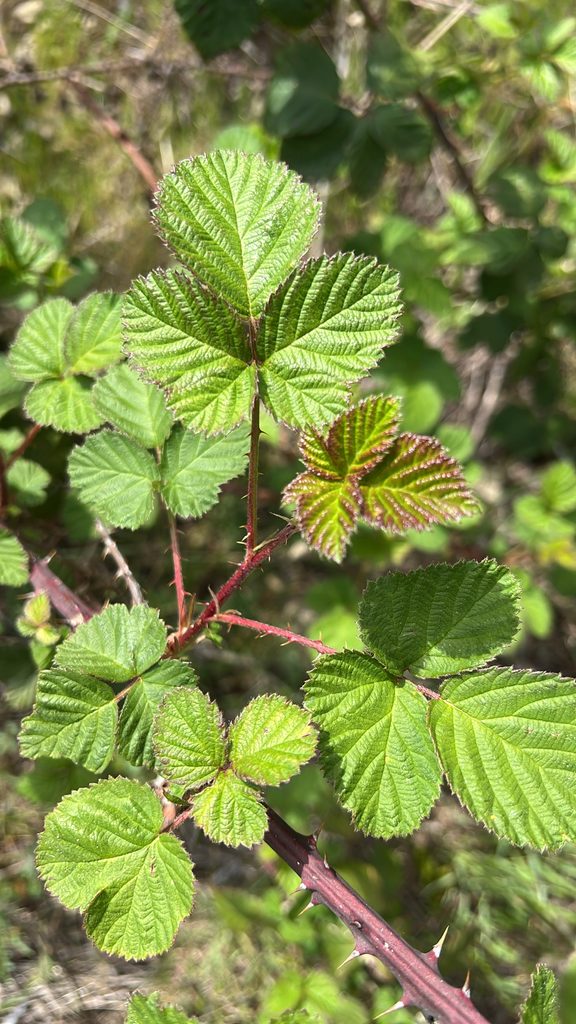
Most people take a two step approach to removing blackberry. First, living and standing dead canes are cut back to hamper the plant’s ability to photosynthesize and provide access to the roots. Christian Noack, SSI’s Forest Ecologist, says this can be accomplished in a number of ways including burning, mastication, cutting, mowing, hand pulling, grazing, or pulling with a winch; his favorite tool to use is the McLeod. It’s important to note here that cut canes may grow roots and establish themselves as new plants, particularly in wet settings like swales or around ponds and creeks. Second, you must remove the root crowns. Blackberry plants form root crowns, also called burls, that can get fairly large as the plant ages. These burls store energy and enable the plant to re-sprout after being cut back. Depending on the size of the plants this can be a very arduous task involving extensive digging and pulling. It is important to reiterate here the necessity of considering the impacts of managing blackberry, because burl removal may leave you with loose, bare soil, excavated holes, and a sore back. What will happen to the site when rains arrive? Is there anything downhill or downstream that will be negatively impacted by that loose soil washing away? Is the site a low point that will become a muddy puddle? If so, consider mulching, seeding with locally native plants, straw and jute waddles, or logs placed across the slope to mitigate erosion.
According to the California Invasive Plant Council’s WeedCUT‘s profile on Himalayan blackberry, the most effective methods are tarping or stump grinding. In the case of tarping, they recommend cutting the plants down to 6 inches or lower before covering with a tarp. Make sure to monitor the edges for runners or sprouts growing from beneath the tarp. The tarp may need to remain in place for 6 months to 2 years. Tarping is a cheap, low effort approach that limits soil disturbance and decreases chances for back injuries and other strains. Like most land stewardship projects, blackberry removal is not a one-and-done action. A few years of monitoring and follow up will ensure the longevity of your work.
Finally, it is important to limit the spread of blackberry seeds by eating as many as you can. Each year in July and August the black fruits will go from shiny to dull, which is a sign that they have lost their tartness and become sweet. This is your sign to jump into action: put on long sleeves and pants, gloves if you’d like, and pick as many berries as you can while avoiding the thorns. Blackberries make for great jams, pies, and cobblers. One of summer’s sweetest treats is a sun-warmed blackberry straight off the vine. Don’t pick blackberries along the road to avoid tire particulates, road dust, and other things you may not want to ingest.