Getting Curious about Quercus
How to tell Canyon Live Oak from Interior Live Oak, a confounding could-be hybrid, and the joys of u...

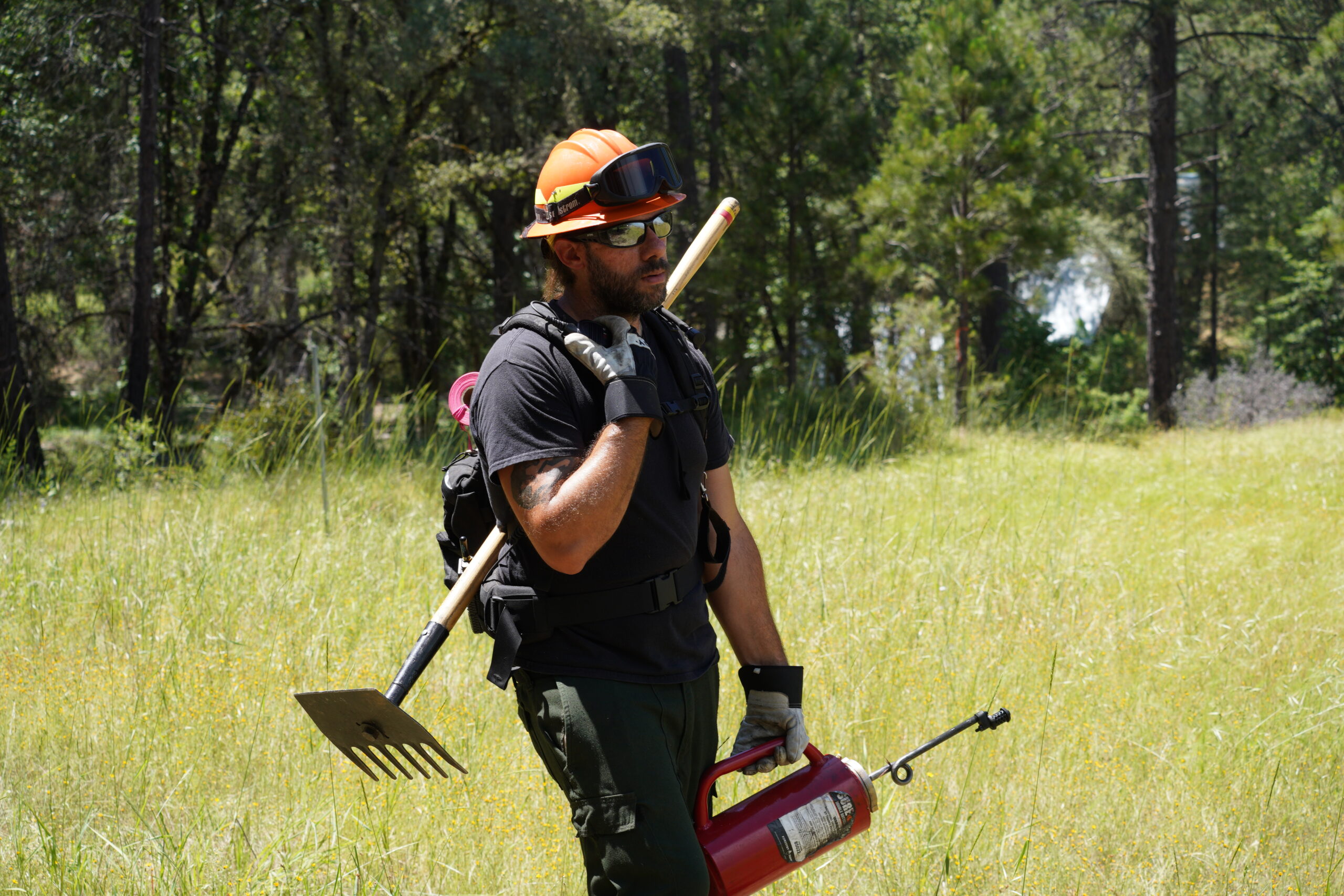
Forest management and fire ecology are hot topics (no pun intended) lately, and have been at the forefront of people’s minds in the Sierra Nevada and general mountain west as fire severity has been increasing in recent decades. Most of these discussions are now based in understanding fire history and forest health with respect to “fire return interval”—time between fires at any given place on the landscape. Decades of research have demonstrated that a century of fire suppression and looking at all fire as “bad” or “destructive” created the buildup of smaller forest fuels that now leave forests ripe for catastrophic fire. What is finally also being embraced in this field, however, is the notion that those decades of research are simply “rediscovering” what people on this landscape already knew, examining it through the lens of western science.
The Sierra Nevada mountains were “forged in fire”; fire-adapted species need fire to clear gaps, cycle nutrients, and germinate seeds. And while much of this fire was “natural” lightning-ignited fire, increasing evidence points to indigenous-lir fires as being the dominant shaper of the landscape for more than 12,000 years. We at SSI embrace both western scientific understanding and traditional ecological knowledge (TEK), and have been working with the Nevada City Rancheria Nisenan on applying, studying, and embracing reintroduction of fire to the landscape in our region. Here we share an interview with Saxon Thomas, Land and Cultural Resource Director for HUṠWEJ, the non-profit arm of the Nevada City Rancheria Nisenan, with support from American River Watershed Institute and Placer County Fish and Wildlife Commission.
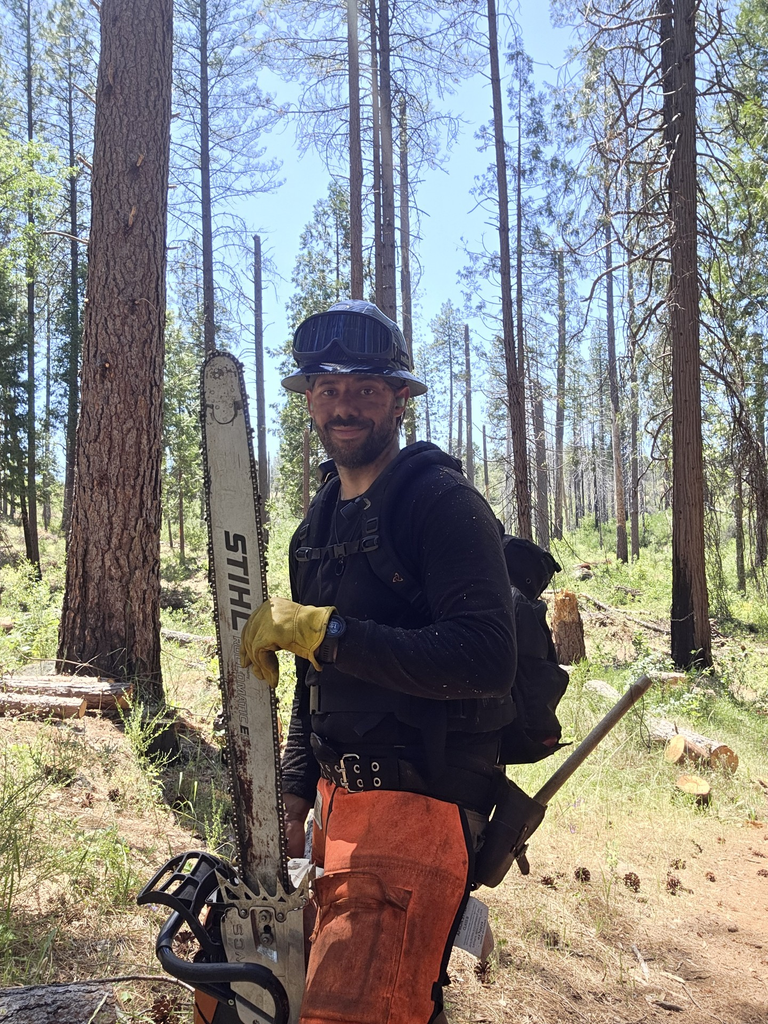
Can you tell us a bit about your background and how you got into forest health and land stewardship?
My background is deeply rooted in the cultures I grew up in. I draw my identity as a Nisenan person from my mother’s side, while my father’s family was one of the early Cornish families who settled in Nevada County. Having roots in this landscape since time immemorial on my Native side, alongside being fifth-generation on my father’s side, gives me a very distinct perspective on what has happened to this land over the 180 years since contact.
I am acutely aware of the destruction of the land, rivers, and plants, as well as the near-genocide of my Tribe. Knowing that history brings a deep responsibility to help repair both our culture and the landscape. But it is equally important to me that I don’t blame myself or people today for what happened back then; my focus is entirely on the work of healing.
That perspective led me to where I am today. I currently serve as a Tribal Council Member for the Nevada City Rancheria Nisenan Tribe (NCRNT) and as the Land and Cultural Resource Director for HUṠWEJ, a Tribally-guided 501(c)(3) nonprofit supporting the NCRNT. For me, land stewardship isn’t a career path I stumbled into, it is an inherent responsibility. Getting into forest health was about stepping into my role to care for Nisenan Ancestral Homelands, bringing Traditional Ecological Knowledge (TEK) back to a landscape that has been so heavily altered.
Through a TEK lens, forest health is about reciprocal relationship and balance. It’s not just about managing timber yields or simply reducing fuel loads to prevent catastrophic wildfire—though those are modern realities we deal with. True forest health means the land is providing for the people, and the people are providing for the land. It means our meadows are functioning to hold water, vital habitats are restored so our native animals can return and thrive, our traditional foodways and medicines are abundant, and the landscape is resilient because it is actively tended to.
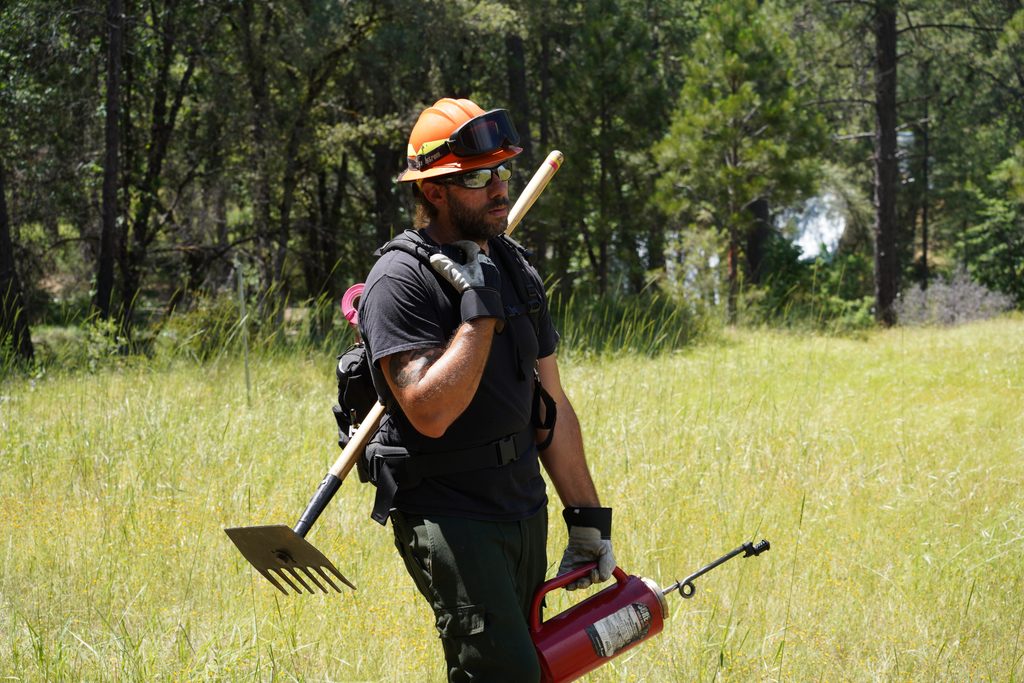
Fire is the foundation. Long before modern fire suppression, fire was the primary tool for maintaining the health of this ecosystem. We refer to fire in the Nisenan language as Sa’. It is medicine for the land. Whether we are planning a Sa’ project on our recently required village site Yulića or conducting prescribed burns with Cultural benefits on our other Projects, fire is how we clear out the understory, promote new growth for culturally significant plants, and reset the ecological clock.
My favorite part is putting Indigenous hands back on the land, right alongside our community coworkers. There is immense power in doing this work on our own Ancestral Homelands, but that power is amplified when we mix Native hands with community members who are eager to learn about cultural reciprocity and how to truly care for the ecosystem.
We are currently a crew of nine, with plans to keep growing. Whether we are managing site stewardship at Yulića or building out the Nisenan Cultural Reclamation Corridor, doing it together is incredibly grounding. We aren’t just doing a job, we are actively restoring this landscape to the way it is supposed to be, and we are sharing that knowledge and relationship with the land hand-in-hand with the broader community.
I look first and foremost to my Nisenan elders, our Tribal Council, the leadership at HUṠWEJ, and my personal mentors. However, my perspective is also deeply shaped by a global Indigenous community. Traveling to Australia to participate in land management workshops in Sydney and then conducting cultural burns with Native mobs in the Bunya Mountains, profoundly impacted how I view our work back home.
Sharing knowledge with other Indigenous practitioners reinforced that while our ecosystems may differ, the core philosophy of land stewardship is universal. It is incredibly powerful to know that Indigenous people all over the world share our holistic viewpoint the understanding that everything is connected, and that impacting one aspect of the landscape inevitably affects another.
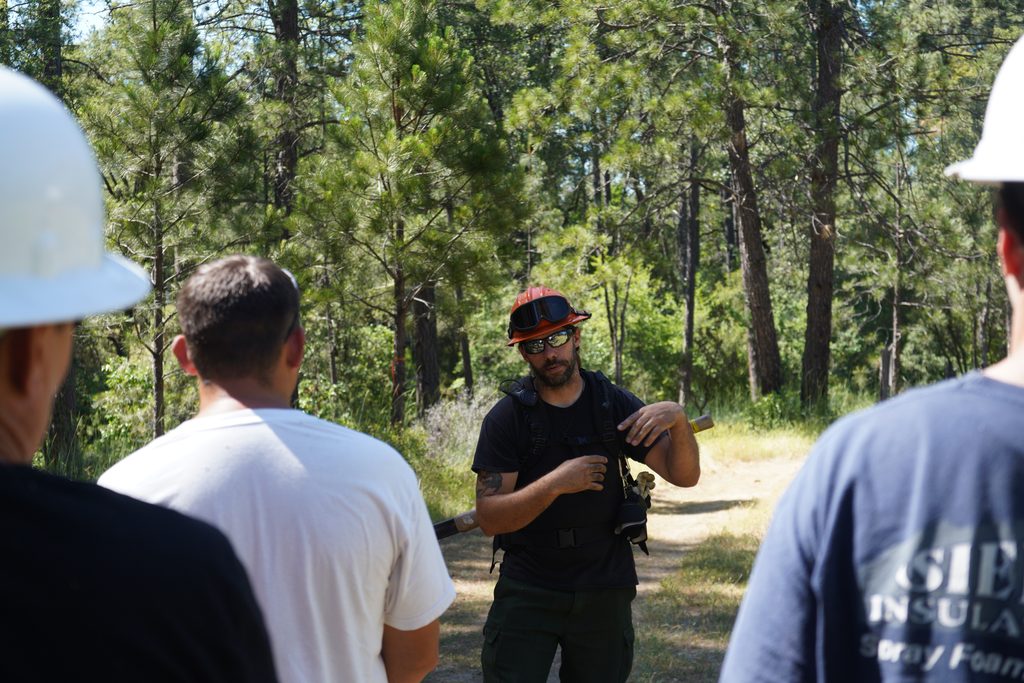
It comes from inherited tribal knowledge and the ongoing work within our community to reclaim those practices. It is a continuous learning process learning from the land itself by observing how it responds to Sa’, and learning through knowledge exchanges with other cultural fire practitioners locally and internationally.
Our primary goal is always cultural and ecological restoration, guided by Traditional Ecological Knowledge (TEK). When we look at a site—like the stewardship work we do at Yulića—the very first question we ask is: What does this land need to heal?
Planning a project means answering that question while navigating modern agency requirements. It starts with deep cultural protocol, but putting “good fire” on the ground today also requires a massive administrative lift. Bridging our TEK with Western regulatory frameworks means I spend a significant amount of time writing Burn Plans for CalFire approval and securing smoke and air quality permits. It also means our Tribally Guided Stewardship Crew goes through formal NWCG training, so we hold the exact same fire qualifications as federal and state agencies.
Ultimately, our approach is about walking in both worlds. We hold strictly to our traditional Nisenan practices and intentions, while maintaining the modern, standardized qualifications required to get the work done.
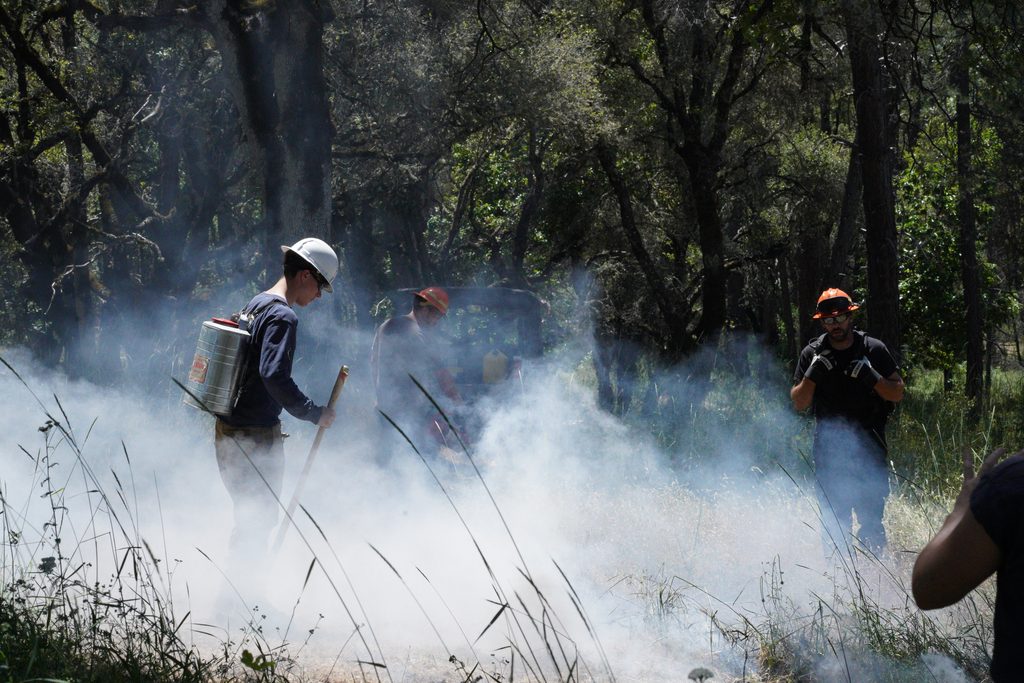
First, I think it’s important to clarify what I actually mean by Cultural Burning, because sometimes people confuse it with ceremonial burning. My Tribe is a cremation tribe, but that ceremonial burning is not the same thing as Cultural Burning. I view Cultural Burning what we call Sa’ as the practice my Tribe has done for thousands of years as part of a deep reciprocity process with the earth. It is about putting fire on the ground specifically for cultural resources and forest benefits.
When you compare that to a formal prescribed burn from an agency, the difference in the “vibe” is huge. A formal prescribed burn is often strictly defensive and mechanical it’s about hitting a specific prescription window just to consume a certain tonnage of fuel. The environment is highly operational.
A Cultural Burn is deeply intentional. We are putting fire on the ground to heal it, to encourage specific plant materials to grow, and to honor those thousands of years of a reciprocal relationship. The language we use, the intention behind it, and the spiritual weight of the act make it feel completely different on the ground.
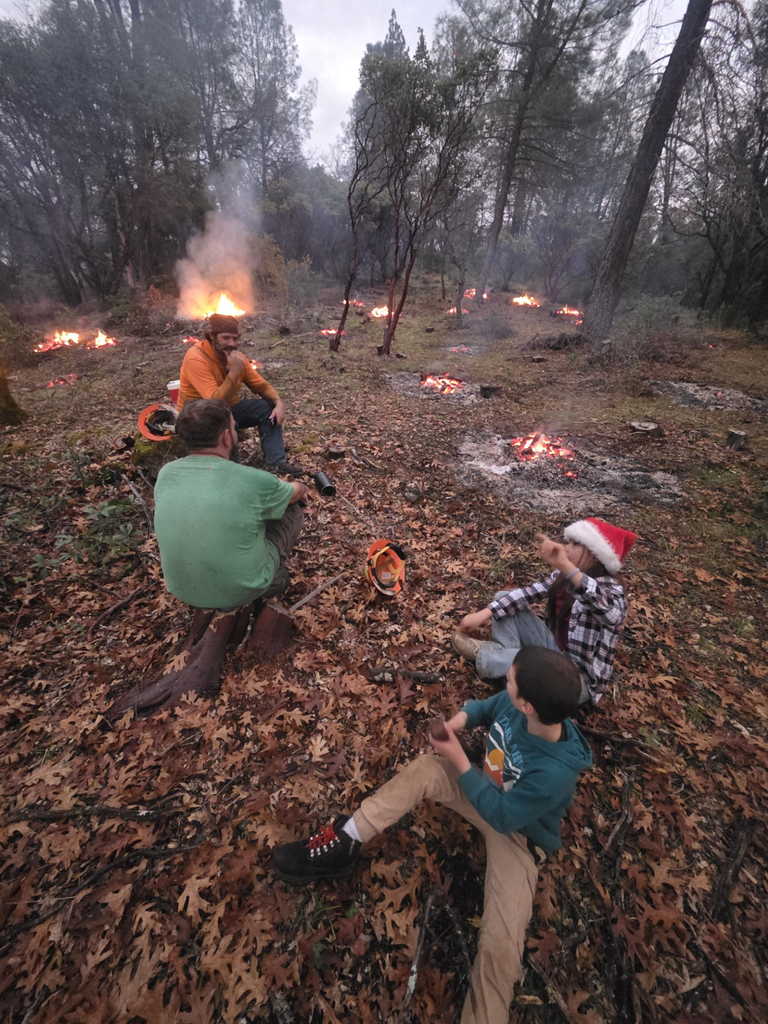
They have to work together right now simply because of the heavily overgrown state our forests are in after a century of fire suppression. We often have to use more formal, mechanized hand-thinning and larger-scale prescribed fire techniques initially just to reduce the massive fuel loads. It is heavy, defensive work required to get the land back to a manageable baseline.
However, that defensive work is just the first step. The ultimate goal is to heal the landscape to a point where we don’t have to rely strictly on large agencies to execute massive, prescribed burn projects. By doing that heavy lifting now, we are paving the way to return to traditional Sa’ applying the much lower-intensity, frequent, and intentional cultural fire that will maintain the health and balance of the ecosystem long-term.
Our grassland restoration and site stewardship at Yulića, along with the Koćim Pakan Project at the Nevada City School of the Arts campus, both standout deeply to me. Restoring grasslands is incredibly vital for the overall health of the watershed. By bringing these open spaces back to life, we are restoring critical habitats, encouraging the return of native plant species, and providing essential forage and ecosystems for local wildlife, which ties directly into our Traditional Ecological Knowledge (TEK).
The Koćim Pakan Project also stands out because it combines everything: forest restoration, fuel reduction, prescribed burns, and invasive species management. We were able to execute the work in a way that is visibly healing and transforming the landscape, all while directly educating the next generation on what this stewardship looks like in practice.
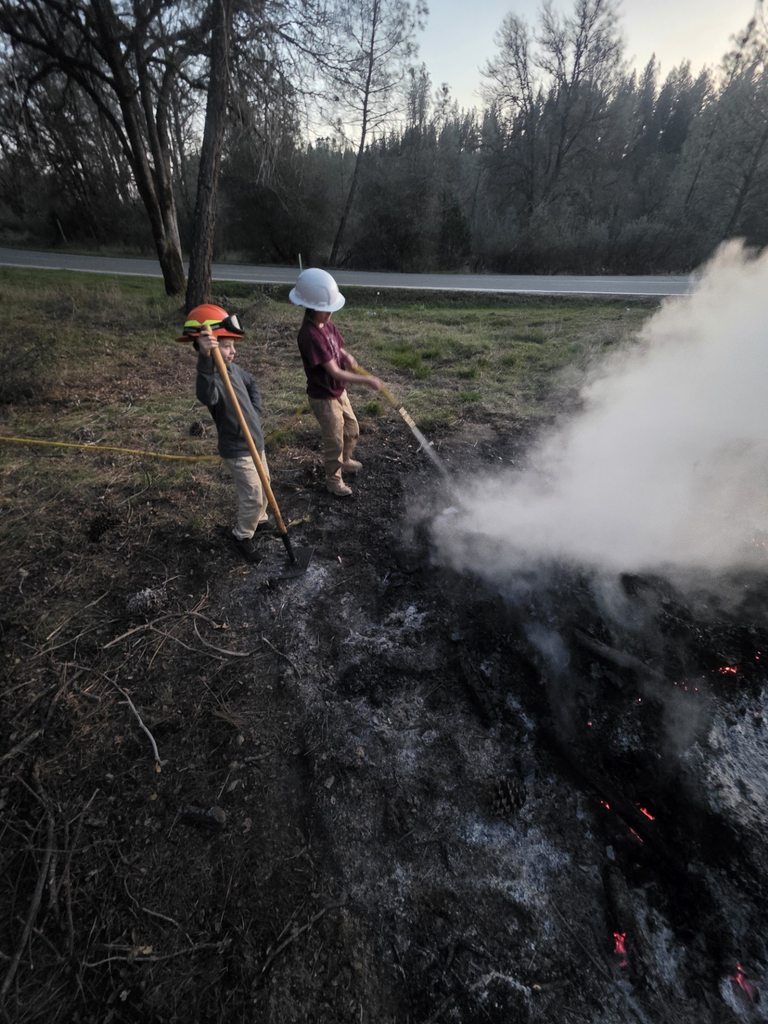
The biggest challenge is bridging Traditional Ecological Knowledge with Western regulatory frameworks. It takes an immense amount of effort to navigate the administrative side of things, secure funding through job bids or grants, and help build an understanding that burn days really need to be based on actual weather conditions, rather than strict calendar dates.
Another major challenge is shifting public perception in a positive way. We want to show the community that fire is a relationship we need to revitalize. That means helping people realize that there is such a thing as “good smoke,” sharing its ecological benefits, and building trust in the professionals doing the burning. We have the knowledge and the workforce ready to go; our ongoing work is simply unlocking systemic access to care for our own land.
I want the community to understand that fire belongs here. For thousands of years, this landscape relied on frequent low-intensity fires to survive. Complete fire suppression is what created the extreme wildfire danger we face today. When applied correctly and intentionally, fire isn’t something to fear, it is a vital, natural process that protects our communities and heals the ecosystem.
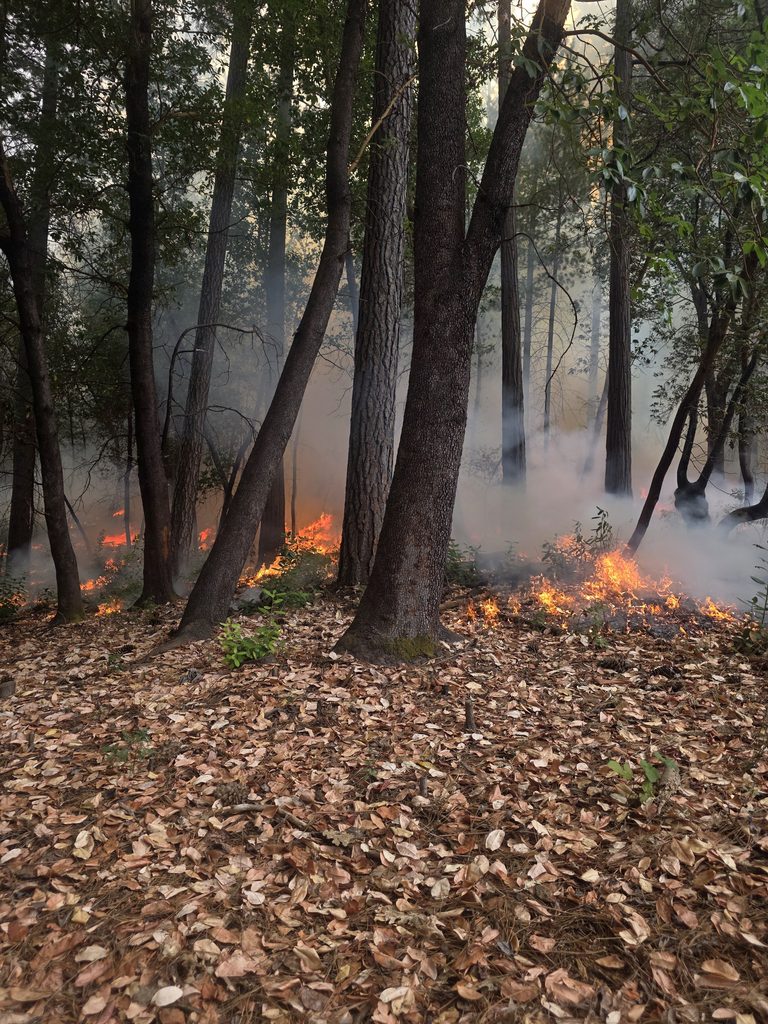
Sierra Streams Institute has been a long-time friend and partner to the Tribe and HUSWEJ. Currently, we are collaborating with them on grassland studies and invasive species work to actively track the ecological effects of fire.
Partnering with local nonprofits like SSI is incredibly valuable because it helps us communicate our work to the broader community. It allows us to pair our Traditional Ecological Knowledge with Western scientific data, giving us hard numbers and field data to back up the positive, healing impacts we know our stewardship brings to the land.
I believe the community needs to move toward deeper support for Tribally led stewardship. True resilience for Nevada County’s forests and watersheds means recognizing Nisenan sovereignty over land management. We need more pathways for our Tribally Guided Stewardship Crew to access the land, apply Sa’, and restore the ecosystems using the knowledge that has cared for this place since time immemorial.
But that is only part of the equation, we also need the broader community to actively participate. That starts with understanding and supporting “good smoke” when we do our work, but it shouldn’t stop there. I want to see our neighbors working their own lands and cultivating such a deep relationship with the ecosystem that they want to start putting good fire on the ground themselves. Whether they are organizing through local Firewise communities, joining Prescribed Burn Associations (PBAs), or leading neighborhood efforts, we need everyone working together to get good fire back on the landscape.
Ultimately, our community heals when we have the access to care for our Ancestral Homelands, and our neighbors are empowered to actively care for their own.